St. Anna, Bia
The recording session – 24 October 2026
On 24 October 2026 I recorded every pipe of the organ once, one note at a time, for a personal Hauptwerk sample set.
This text was generated by AI from curated notes and may contain errors. Corrections welcome

What I set out to do
The aim is a personal Hauptwerk sample set that keeps the organ as it is: its real tuning, the differences between pipes, natural attacks and releases, and the church acoustics.
What I recorded
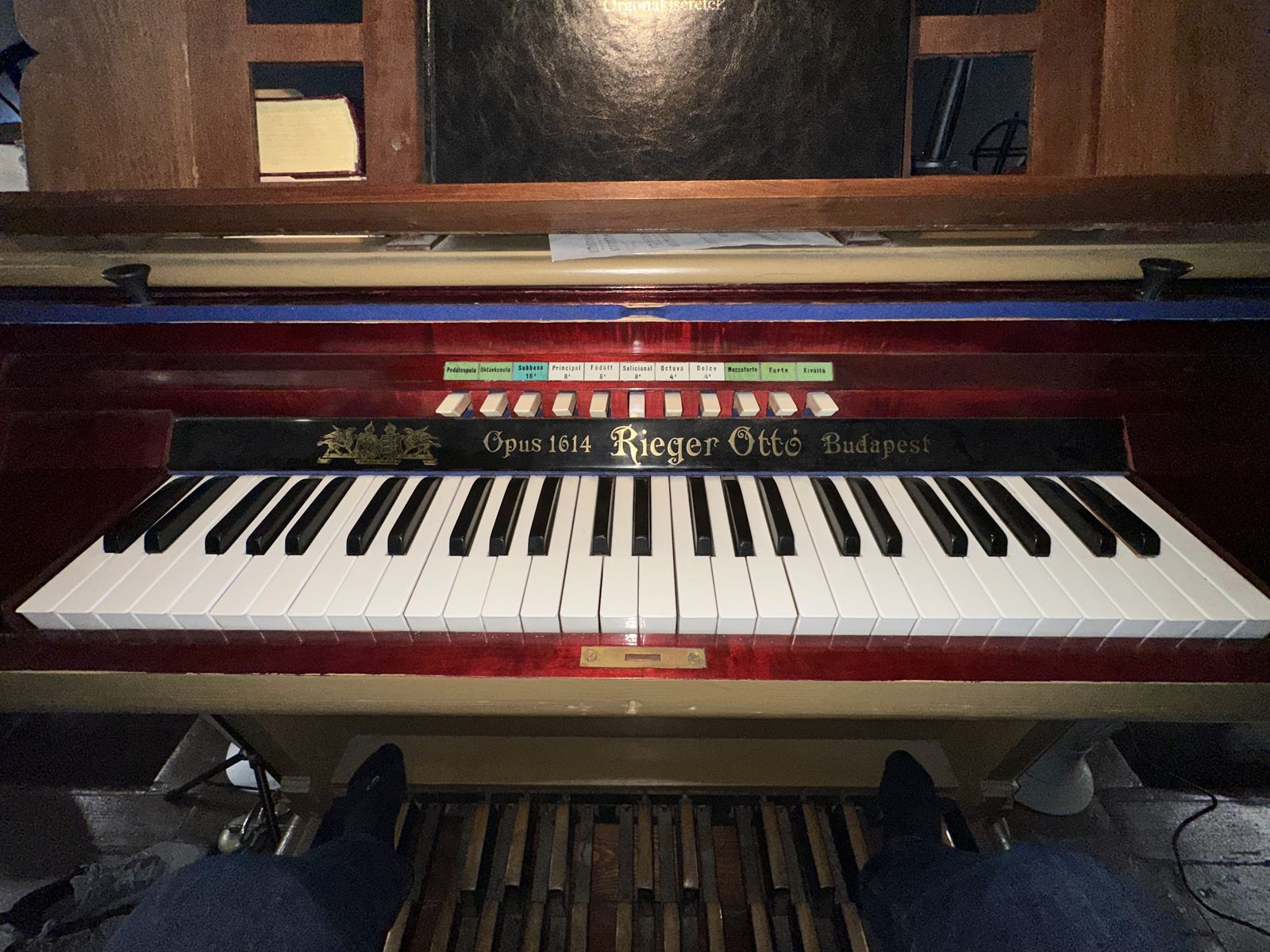
Every physical pipe was recorded once, one note at a time. Octava 4' and Dolce 4' borrow their pipes from Principal 8' and Salicionál 8', so only their 12 extra treble pipes were recorded. That gives 213 samples:
- Principal 8' and Octava 4'
- 66
- Födött 8' (Gedackt)
- 54
- Salicionál 8' and Dolce 4'
- 66
- Subbass 16'
- 27
The 12 treble pipes of Dolce 4' were recorded in a separate take; see what that caused.
Note by note
For each note I held the key for about 10 seconds, released it and waited until the reverberation had died away. I also made a separate recording of the room tone, with the blower running. I made no recording with the blower off.
 (larger photo)
Where the microphones stood
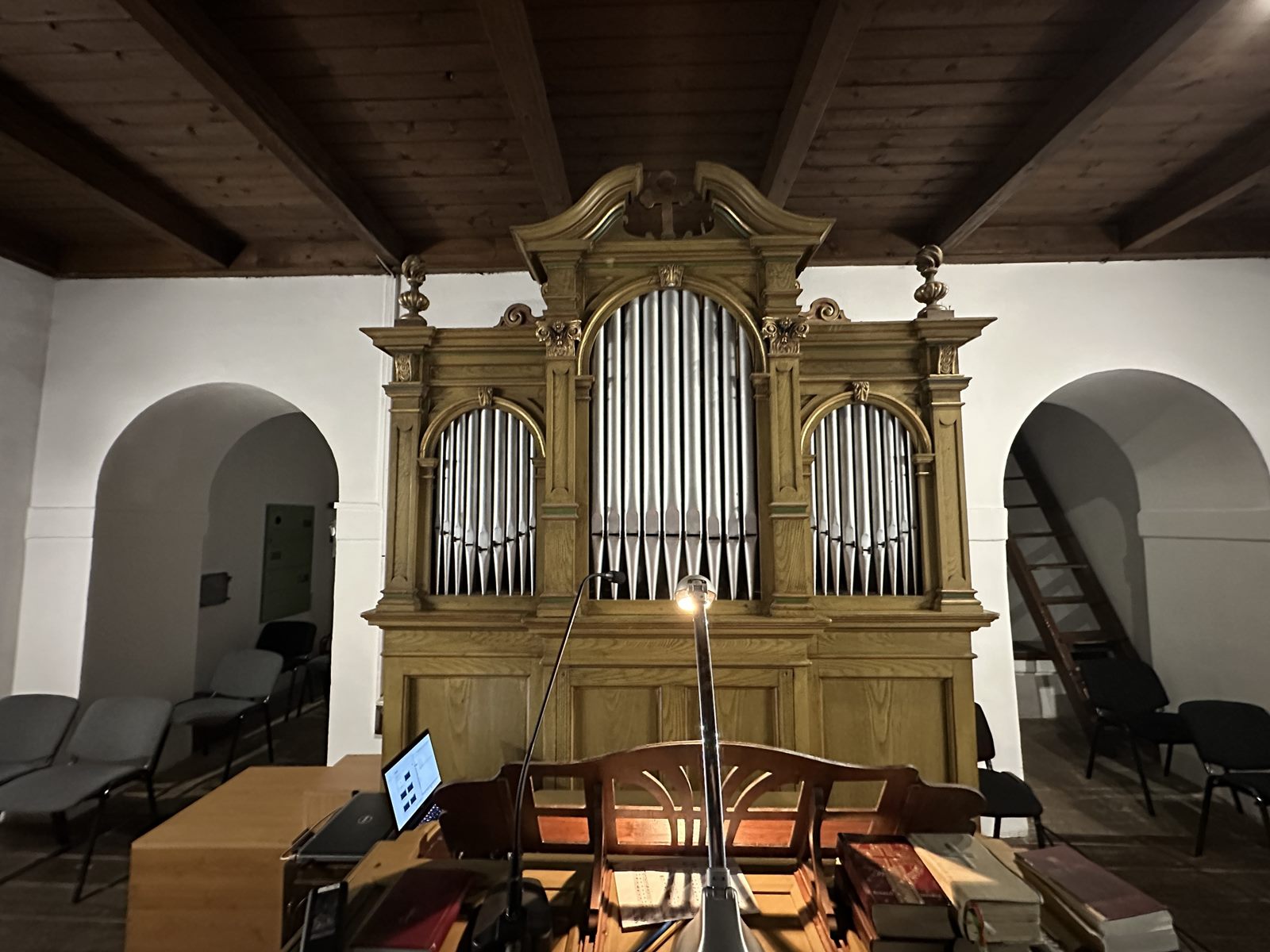
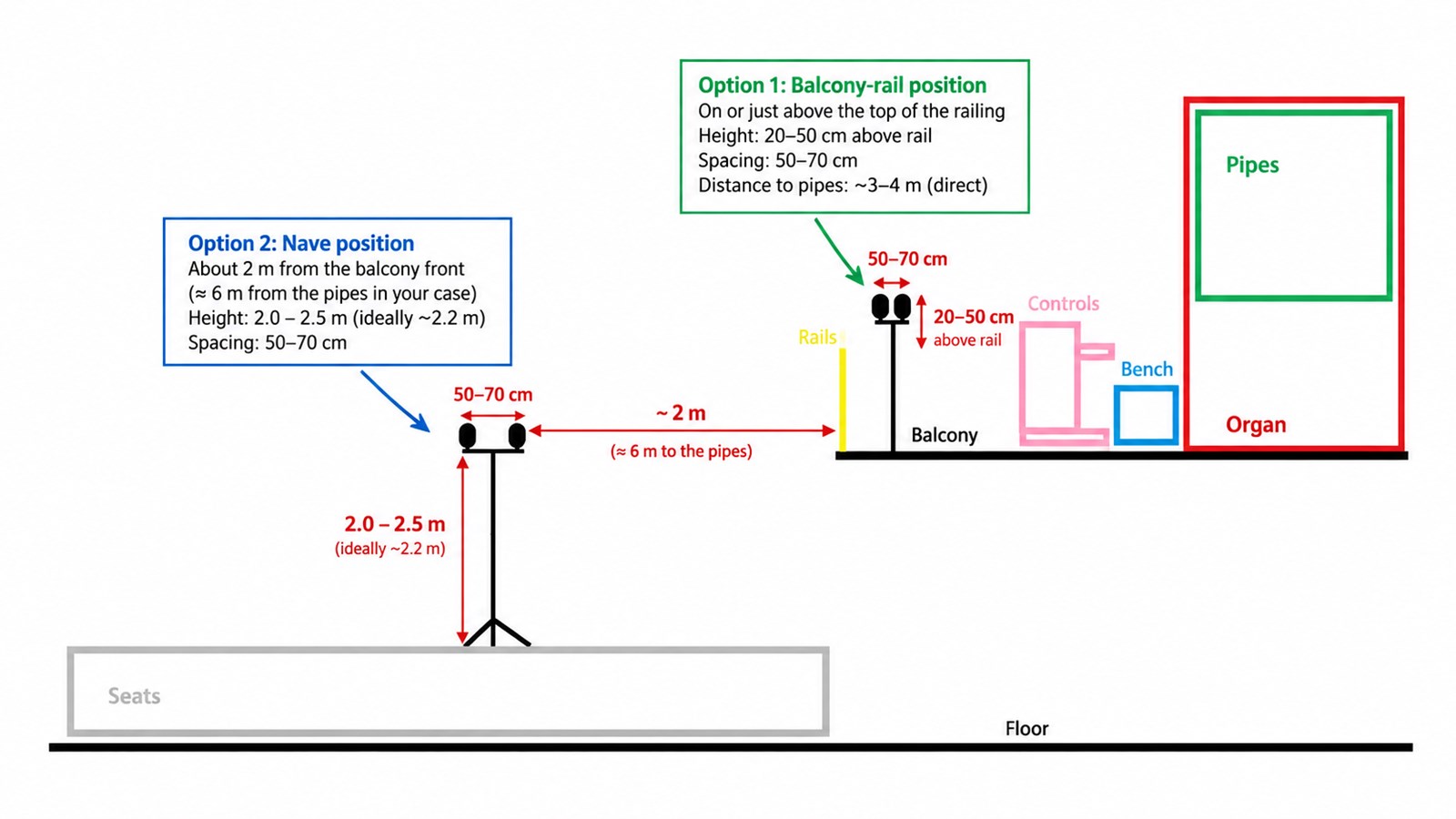
I planned and tested two positions for the stereo pair, whose two microphones stood about 50–60 cm apart:
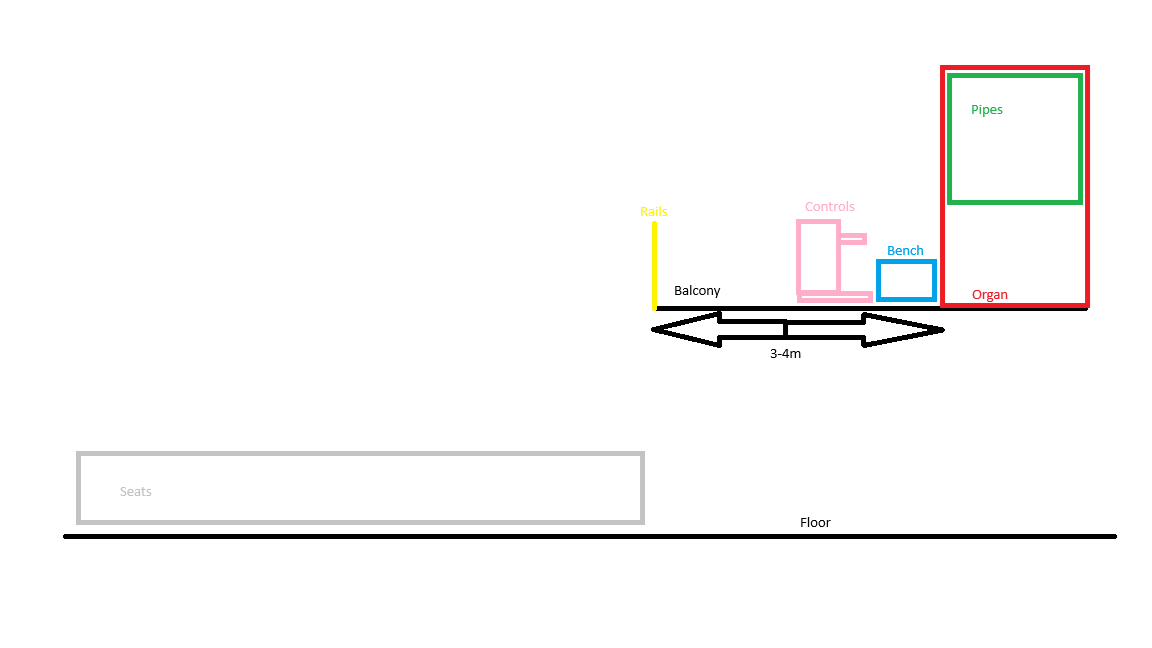
- Option 1, just above the gallery rail (20–50 cm above it and about 3–4 m from the pipes, as planned), gave a stronger direct sound, clearer attacks and less blower noise.
- Option 2, in the nave about 2 m from the gallery front and about 6 m from the pipes (planned height 2–2.5 m), gave more room sound, but more noise and less detail.
I chose Option 1. The samples still have plenty of church reverberation.
 (larger photo)
 (larger photo)
 (larger photo)
Level and format
I recorded in Audacity at 48 kHz in stereo, as 32-bit float, and exported the samples as 24-bit WAV files. The selectable processing of the microphones and of Windows was switched off; see the tools.
After several level tests, the gain was set low so that no pipe could clip. The lowest Subbass C, for example, peaks at about −29 dBFS: safe, but quiet. The microphone position and the gain stayed the same for the whole session, so that the ranks can be balanced later.
What went wrong with the microphones only showed up afterwards; it is described under difficulties.