St. Anna, Bia
St. Anna Church, Bia – The former chapel of the Sándor family
Built in 1766 for Baron Antal Sándor in connection with the manor house, the church was the Sándor family's private chapel until 1863. It has been a parish church since 1949 and is on the Pest County heritage register.
This text was generated by AI from curated notes and may contain errors. Corrections welcome
The building
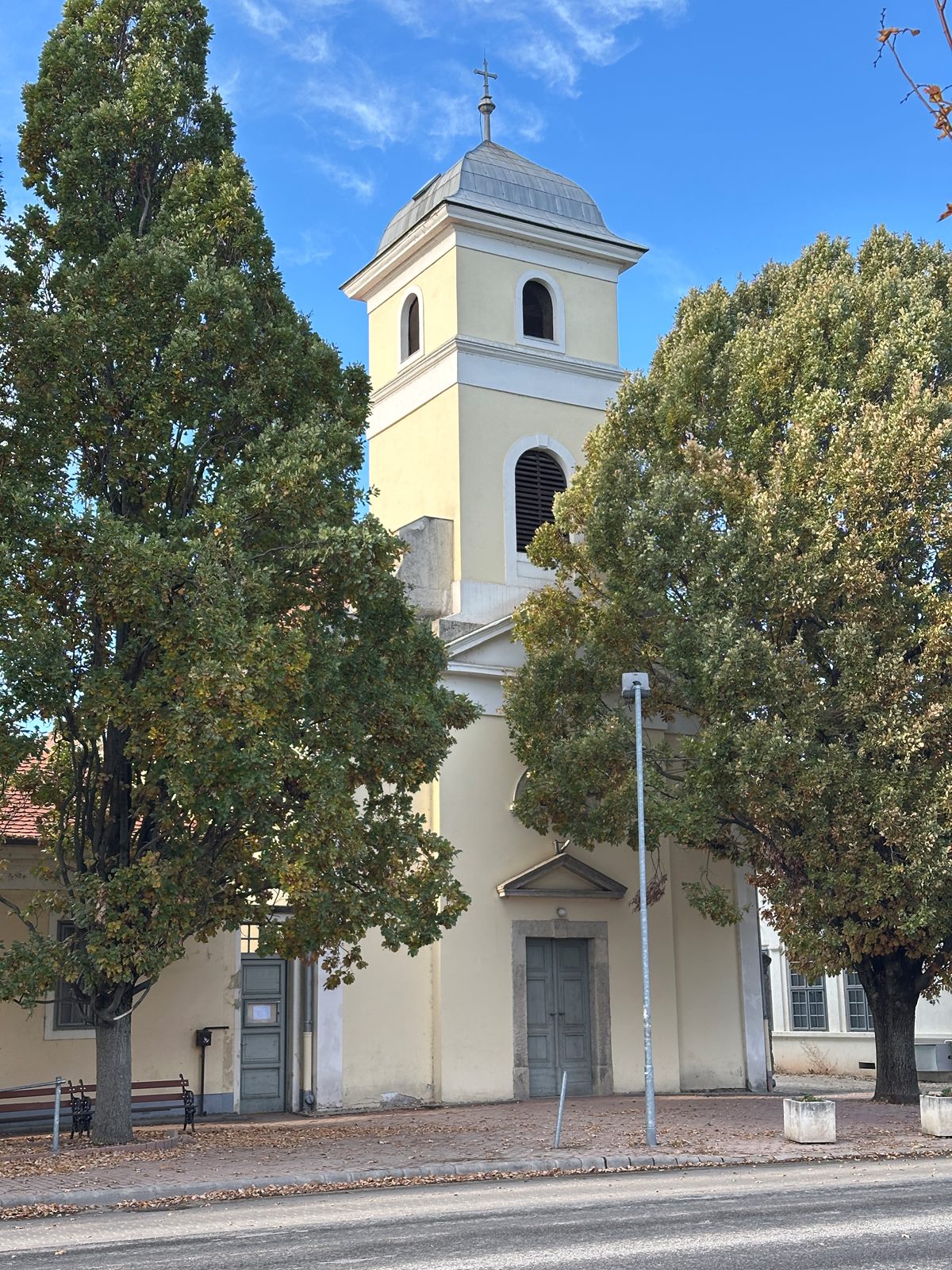
The church was built in 1766 for Baron Antal Sándor, in connection with the manor house, probably on or next to the site of the earlier private chapel of Szent Kristóf. Its designer is not known.
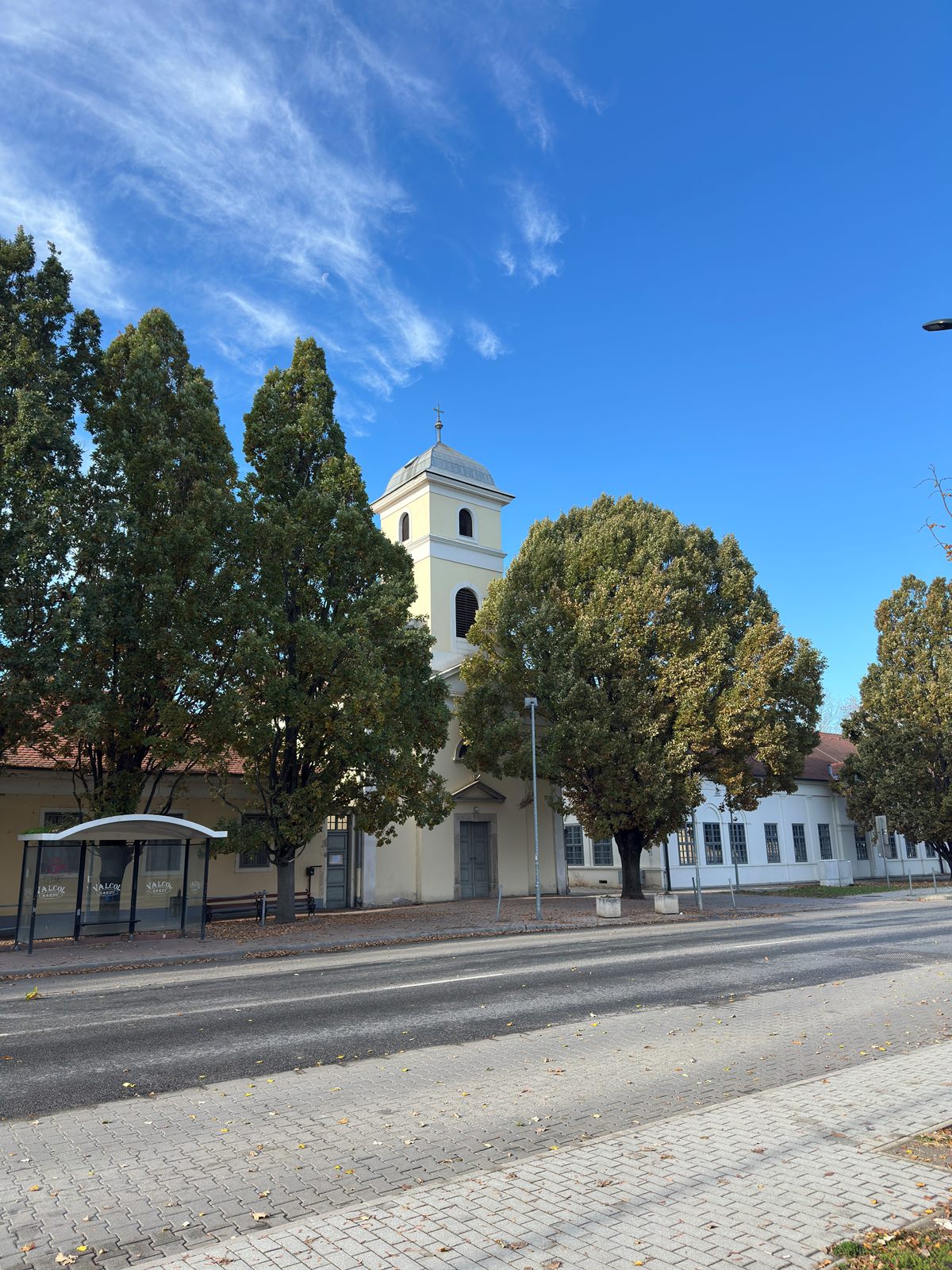
It is a single-nave church with a straight-ended sanctuary and a gallery. The sources date its present form differently. According to the Biatorbágy heritage register it had reached it by 1800, and the entrance keystone bears the year 1800. According to the 2008 building-history study by BME, it was rebuilt to its present form in 1823, when the wooden tower was replaced by a stone one. The Classicist street facade was built to match the new manor house. The church was renovated in 1891–1892.
 (larger photo)
From family chapel to parish
- Until 1863 the church was the Sándor family's private chapel, though local people used it too. On 30 April 1863 Count Móric Sándor gave it to the use of the faithful by a deed of foundation; the building stayed the property of the estate.
- It was a branch of Torbágy until 1859, then an independent chaplaincy, and it has been a parish since 1949.
- The parish registers begin in 1775 for baptisms and deaths and in 1781 for marriages; the Historia Domus begins in 1921.
Altarpieces and furnishings
- The first painting of St. Anna was a gift of the patron. By 1817 it was badly damaged by damp, and its fate is unknown.
- In 1904 Princess Pauline gave a new altarpiece of St. Anna; the painter is not known.
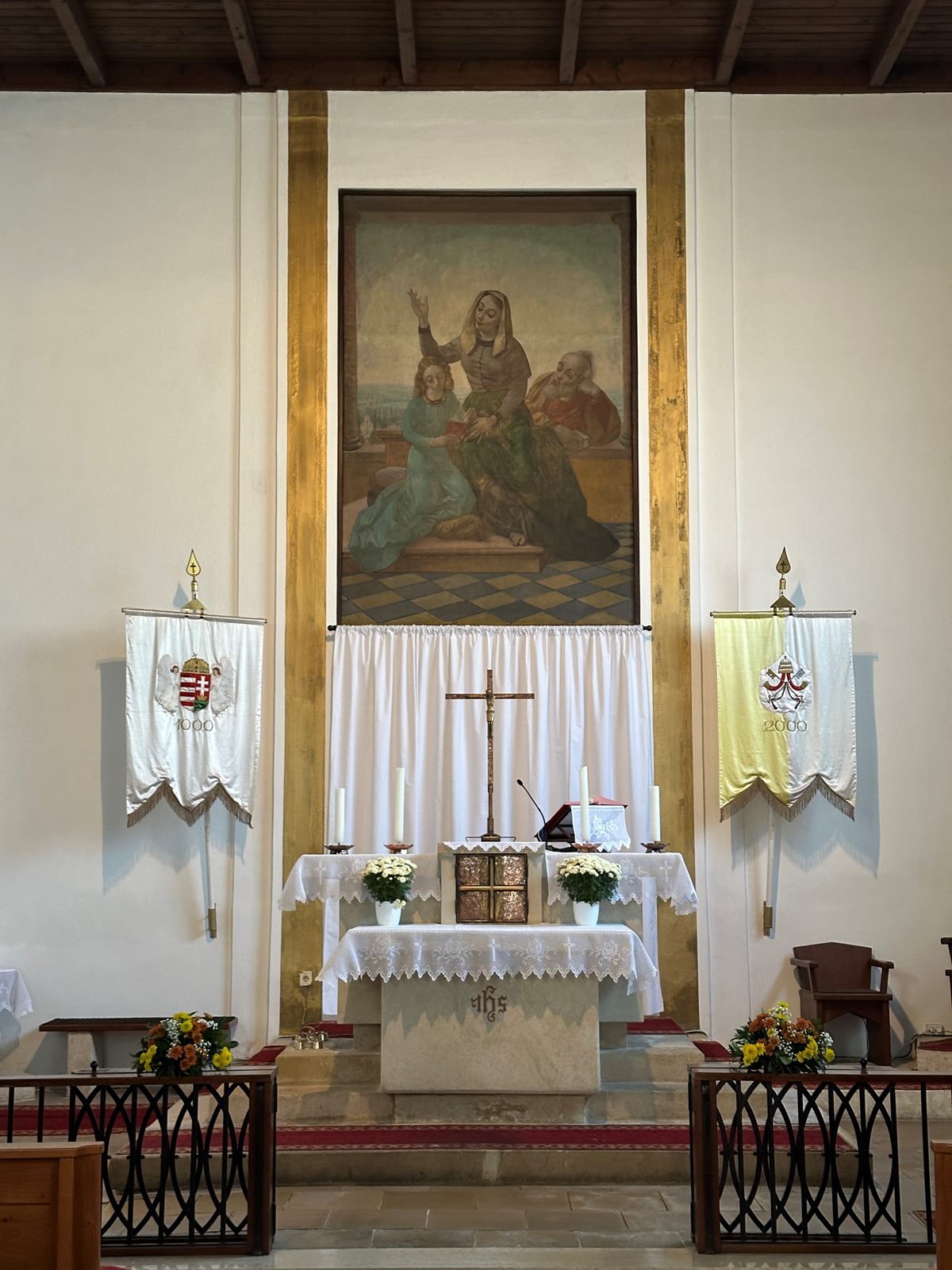
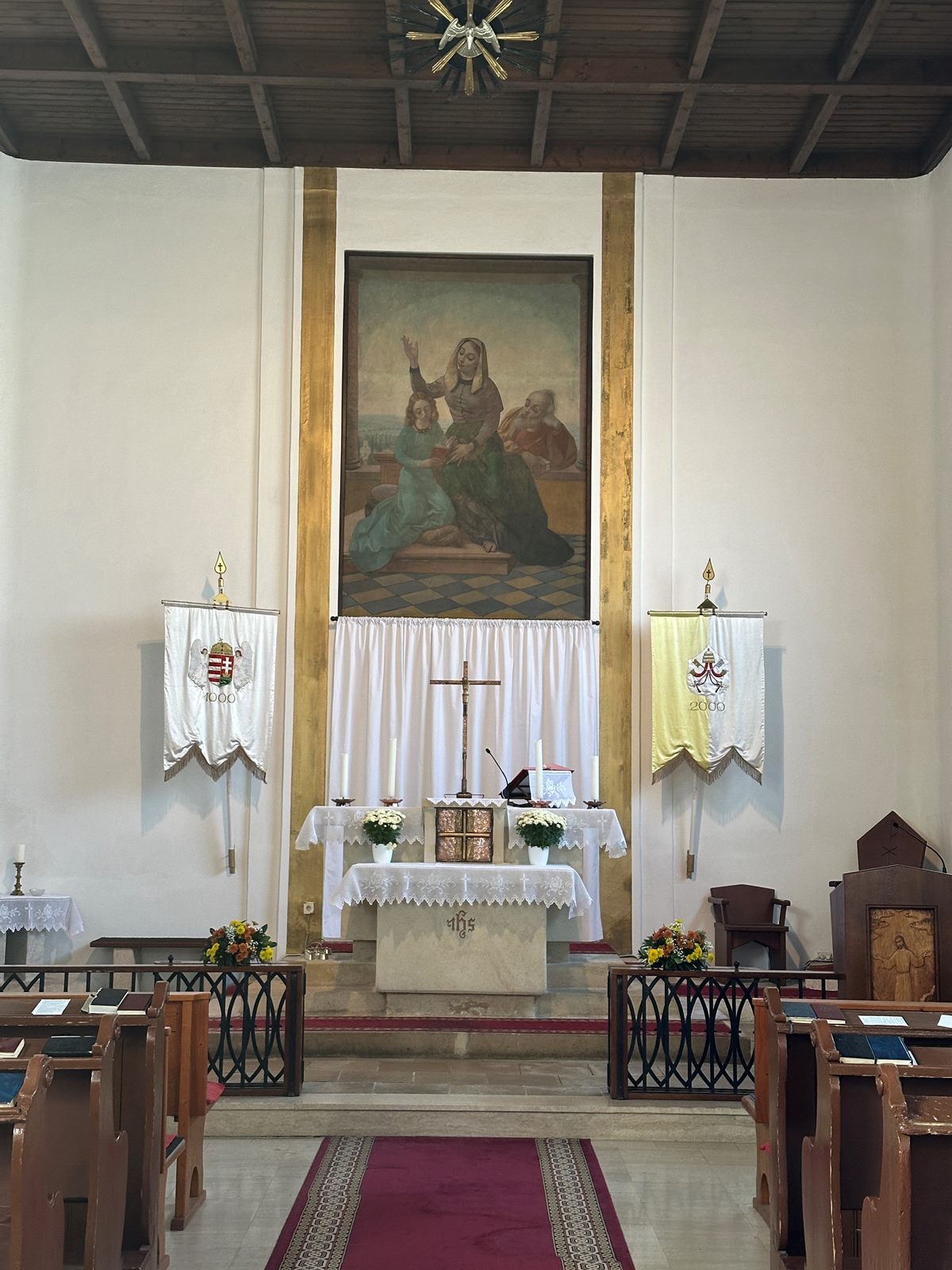
- In 1952 a painting by Pál C. Molnár replaced the earlier altarpiece, which was in poor condition. It shows St. Anna, the child Mary and St. Joachim, with the village of Bia in the background.
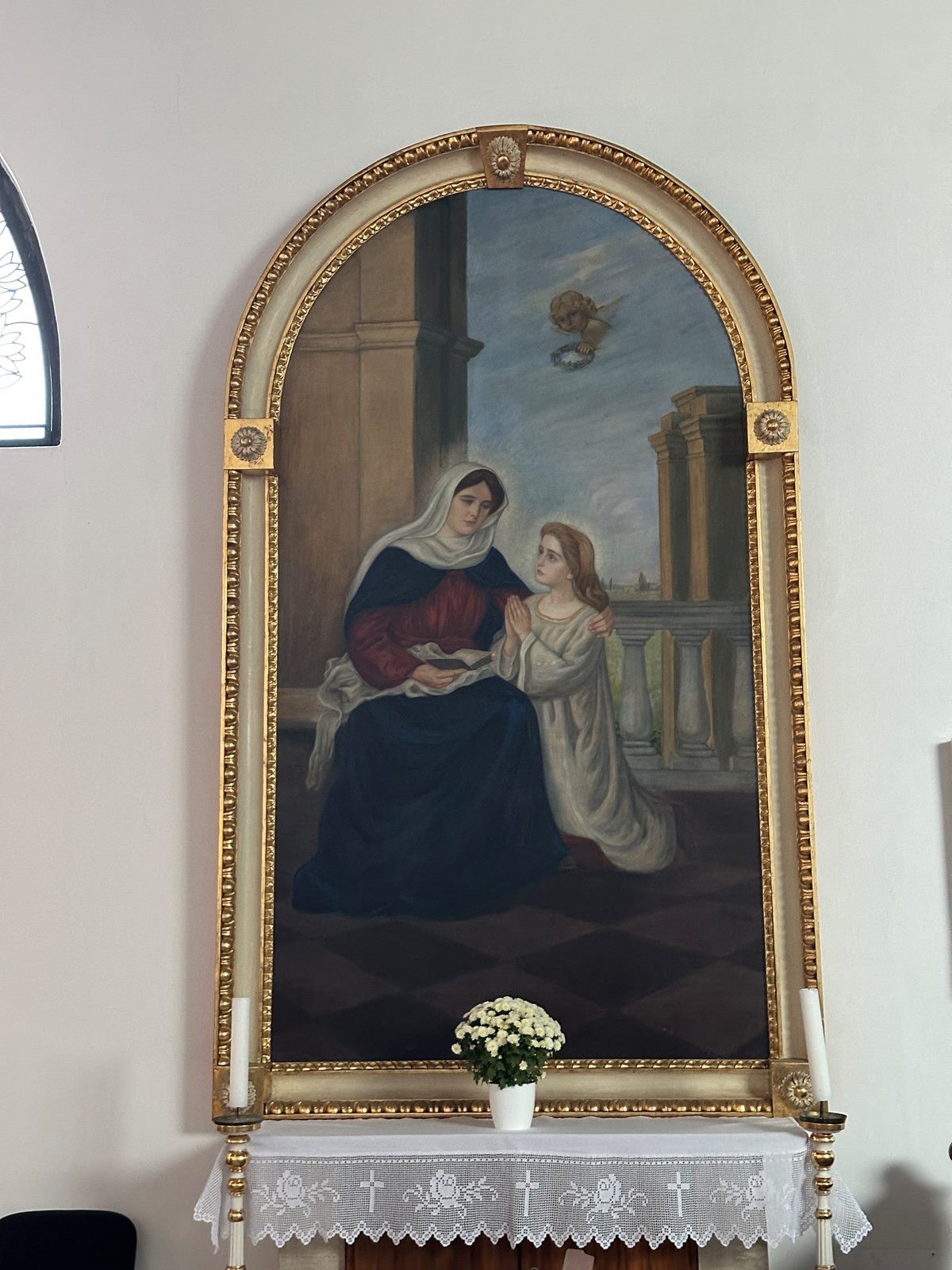
- An older, original altarpiece in a Louis XVI frame now hangs at the side.
- The white marble font was a gift of Katalin Sörös in 1903.
The twentieth century
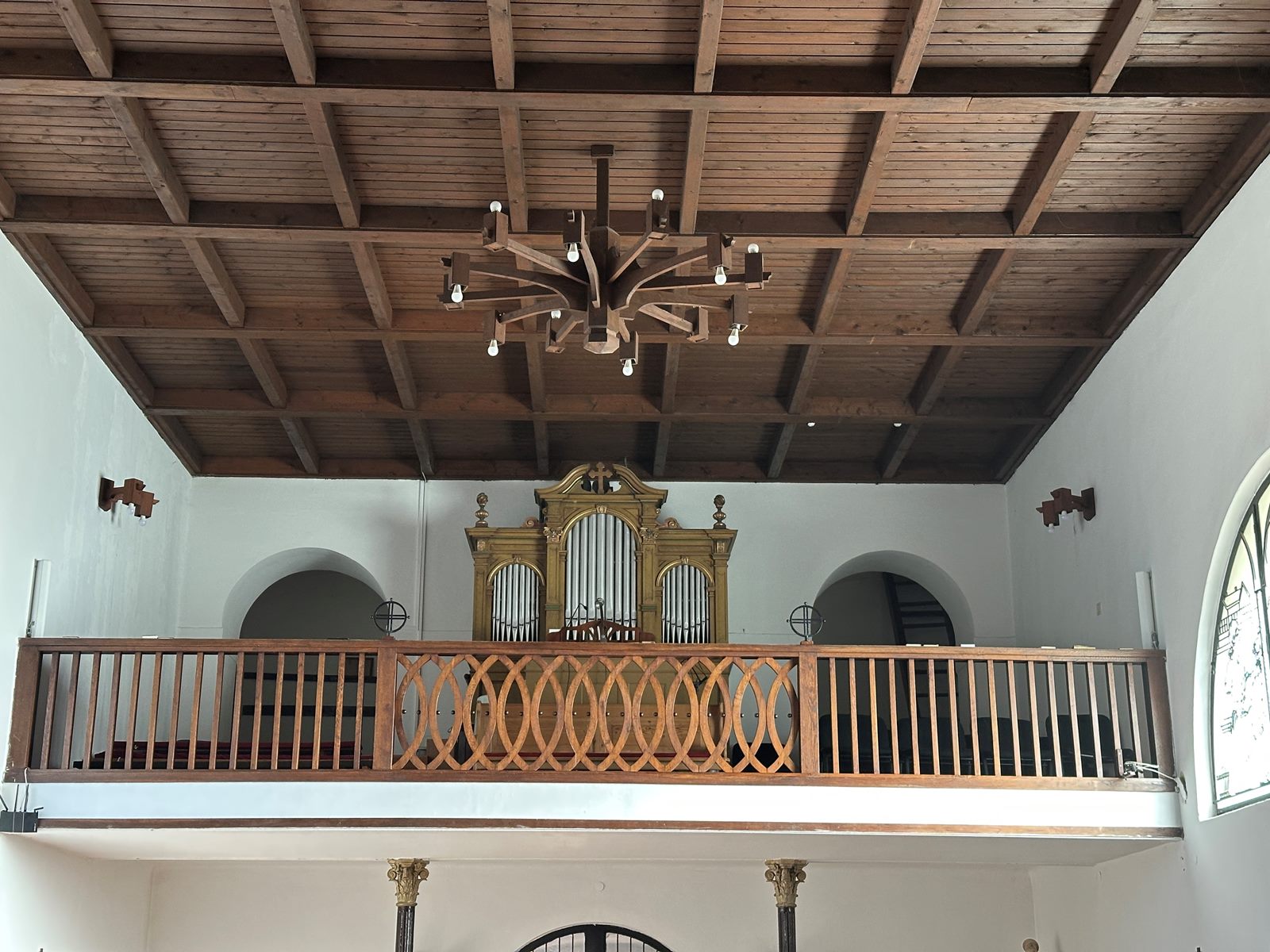
- 1909–10: the patron had the choir gallery enlarged, and its two stone columns were replaced by cast-iron ones.
- 1924: a tornado brought down the tower; the estate rebuilt it the same year.
- 1928: the church was renovated: the outside by the estate, the painting of the interior by the parish.
- 1934: the tower was raised for new bells, with four small bell windows.
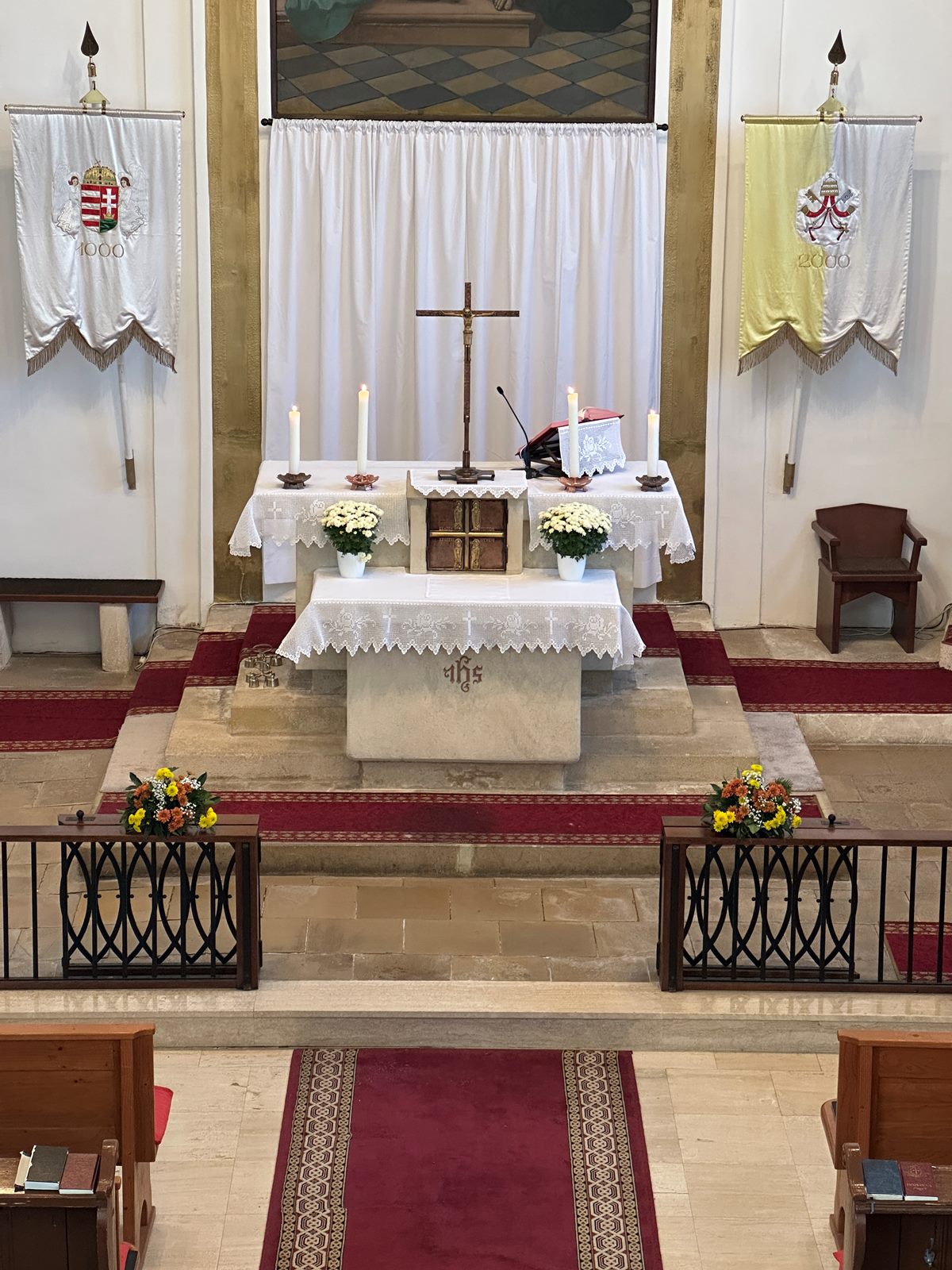
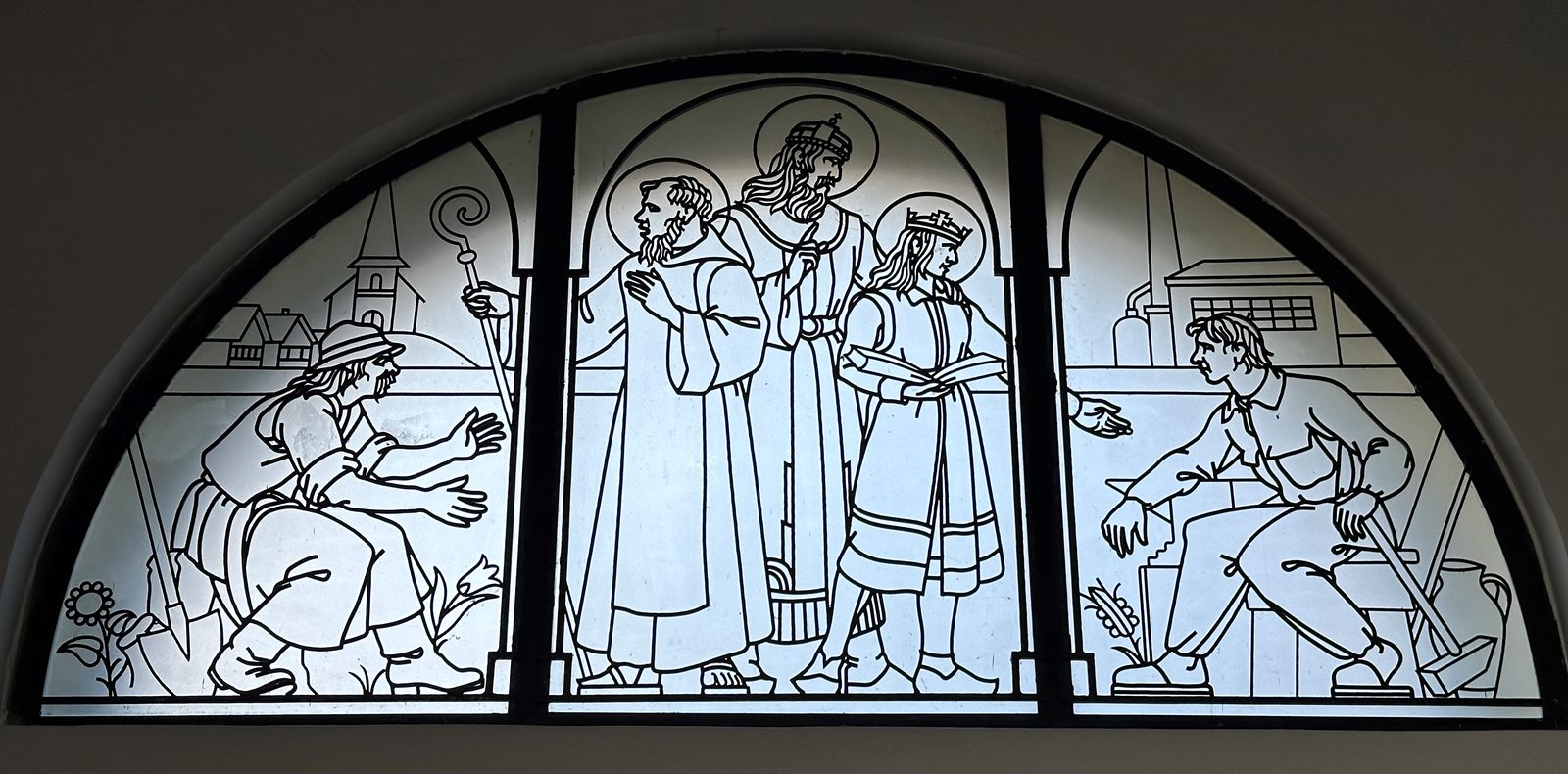
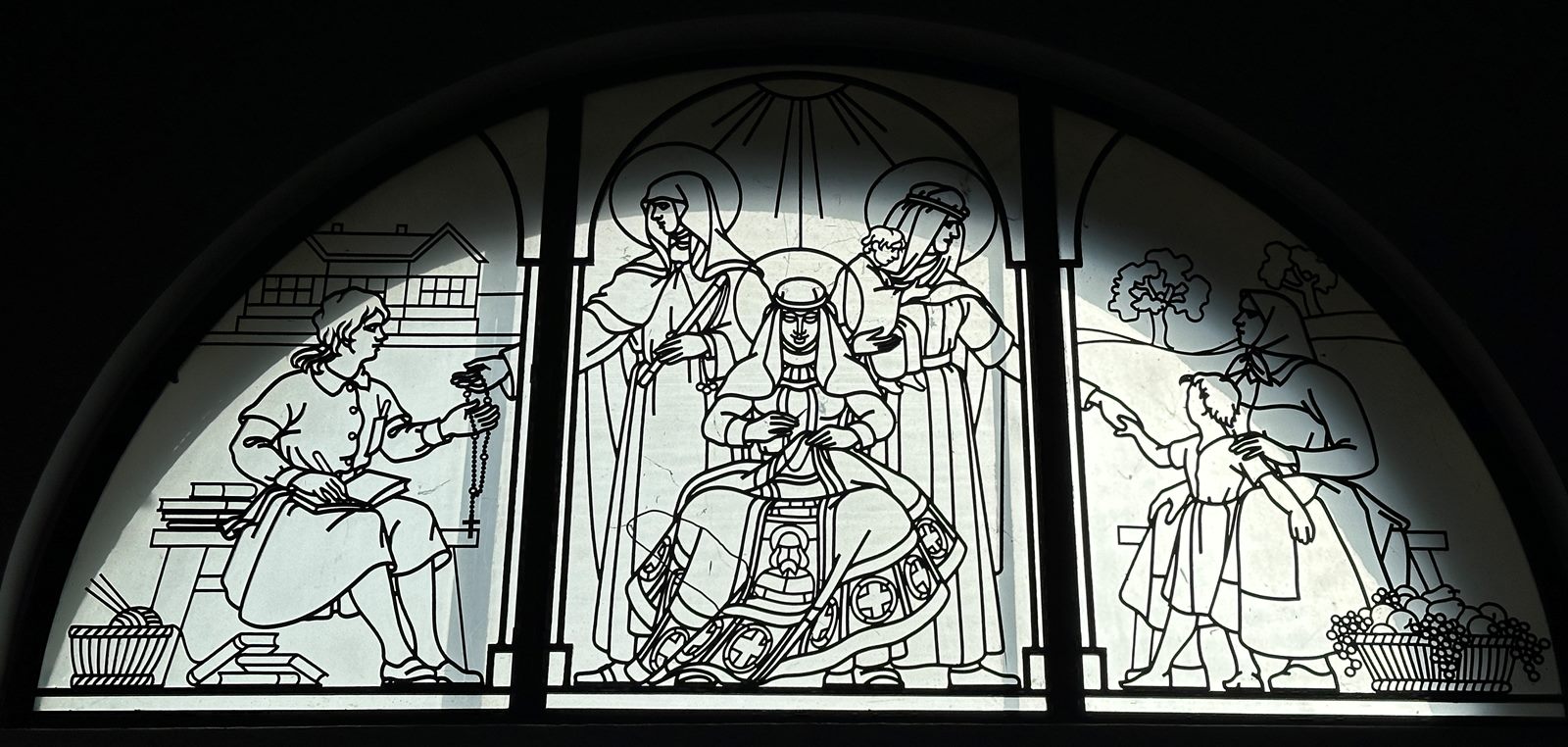
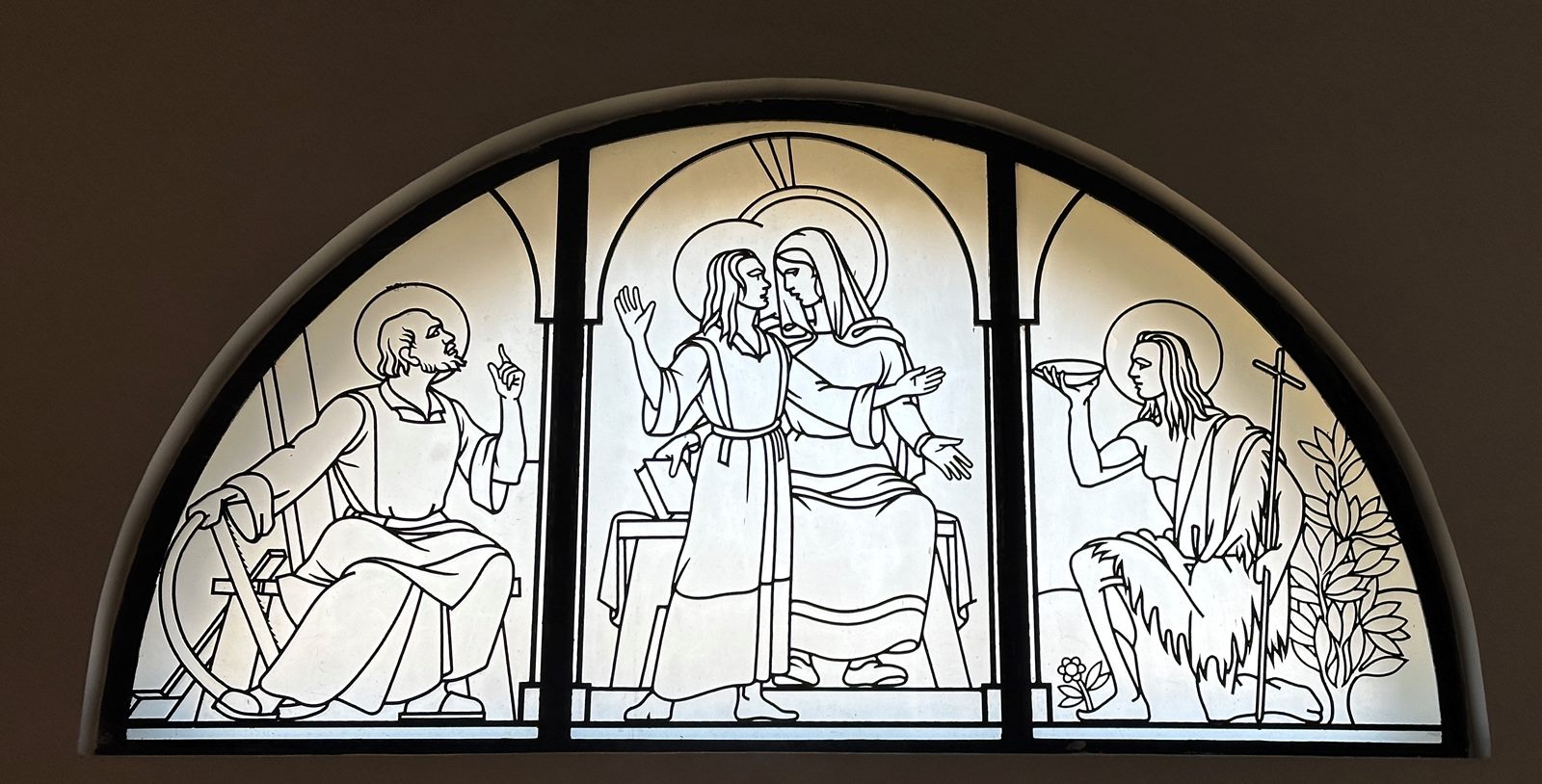
- 1948–1971: under parish priest András Angeli the interior was gradually modernised: a new confessional in 1949–50; a new gallery railing and communion rail designed by Gyula Tóth, after plans of 1950–51 by the engineer Károly Csurgay to make the gallery more stable; and in 1953 an altar facing the people, also designed by Gyula Tóth, more than a decade before the Second Vatican Council. At the same time came three wrought-iron windows with cathedral glass, showing Hungarian saints and saints of everyday life.
- 1973–74: the unsafe stuccoed wooden ceiling was replaced by a new coffered wooden one.
- 1990s: a side altar of Mary.
- Early 2000s: underfloor heating; the original stone floor slabs of the nave were replaced.
- 2007: the stone altar and the font were cleaned.
Heritage and feast day
The church has been on the Pest County heritage register since 2018 (decision 38/2018). Its patronal feast is that of Saints Joachim and Anna, on 26 July.
The church in pictures
 (larger photo)
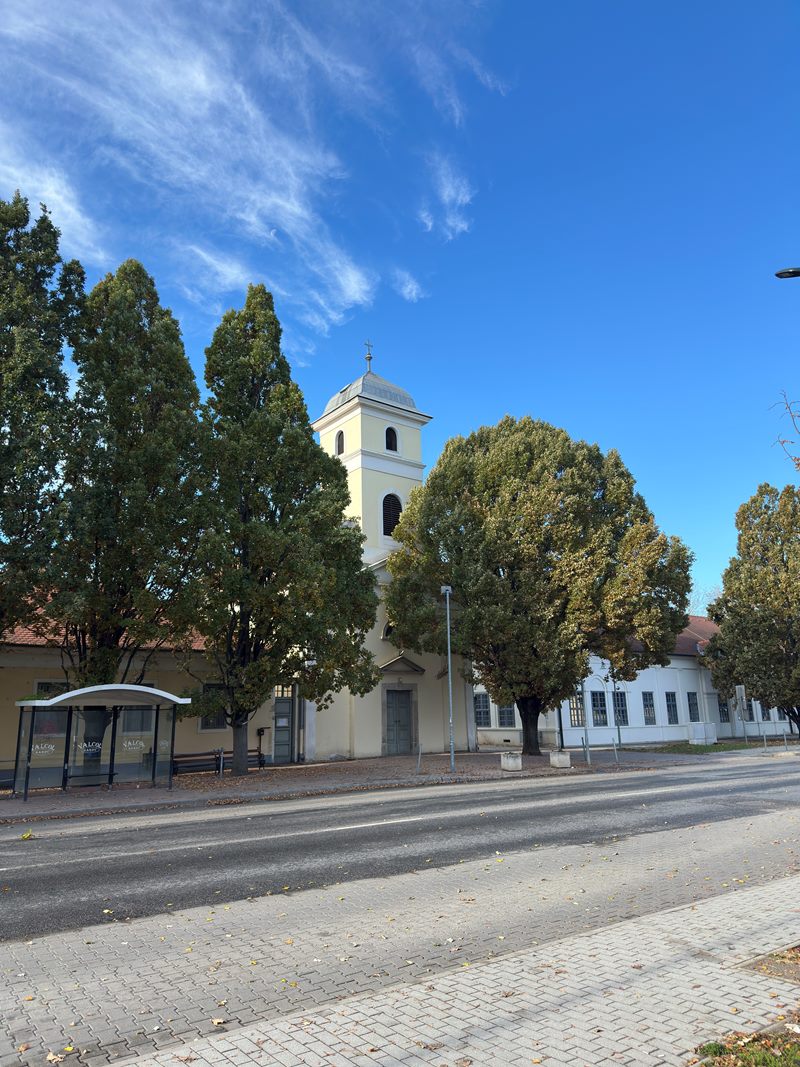
The church from across the street. 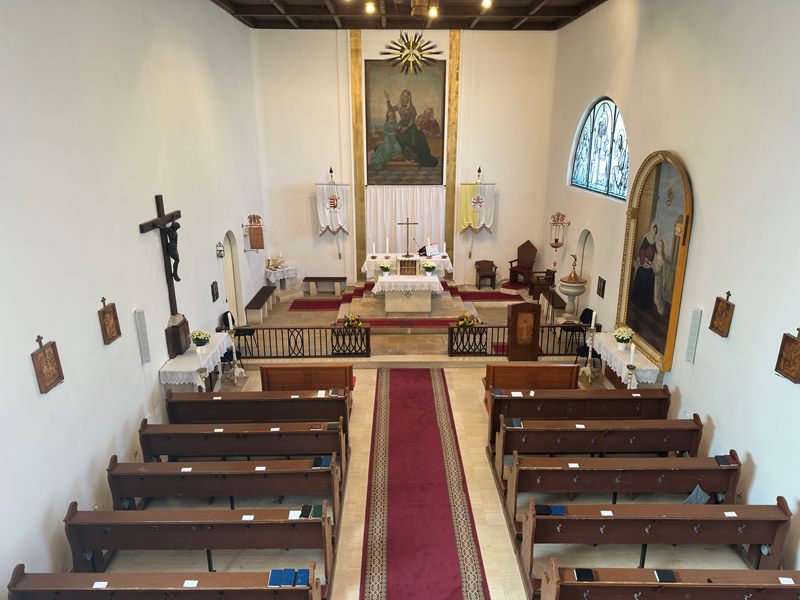 (larger photo)
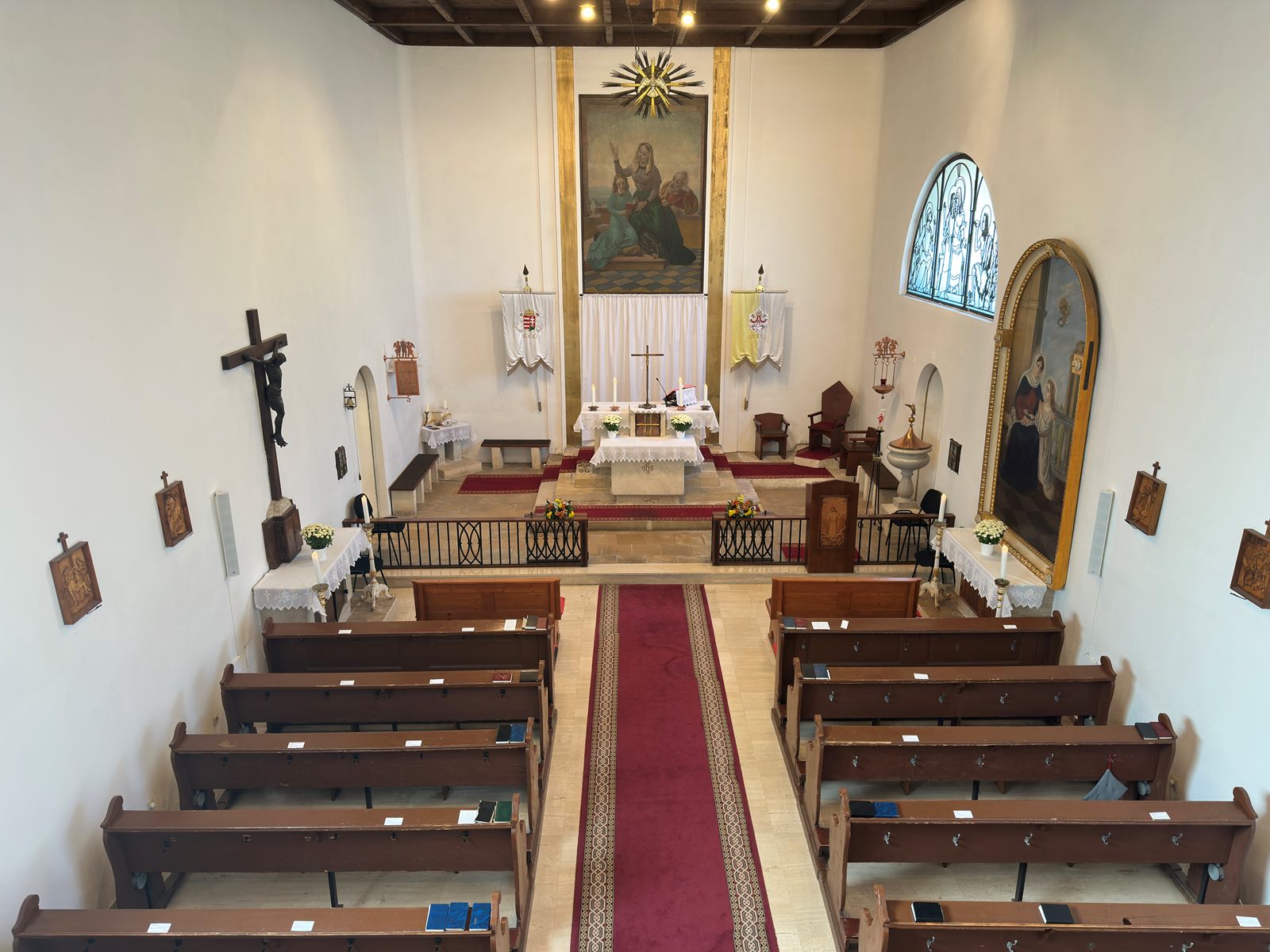
The nave and the sanctuary, seen from the gallery. 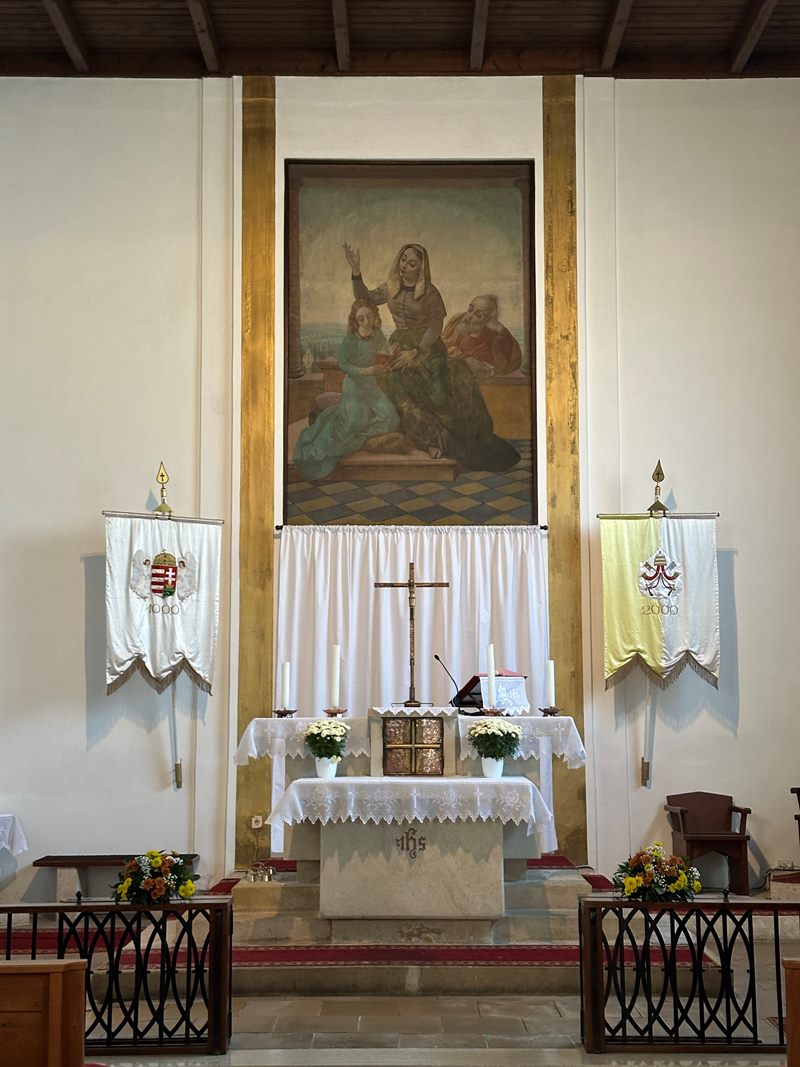 (larger photo)
The sanctuary, with the altarpiece of St. Anna, the child Mary and St. Joachim. 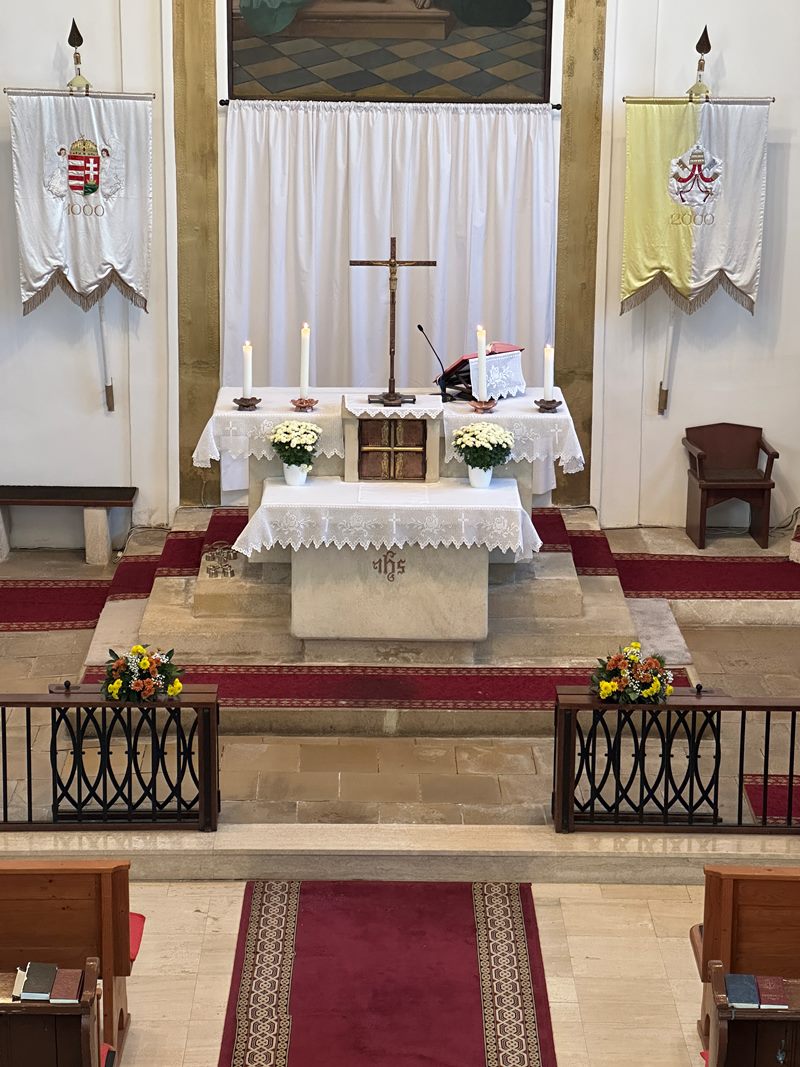 (larger photo)
The altar, close up. 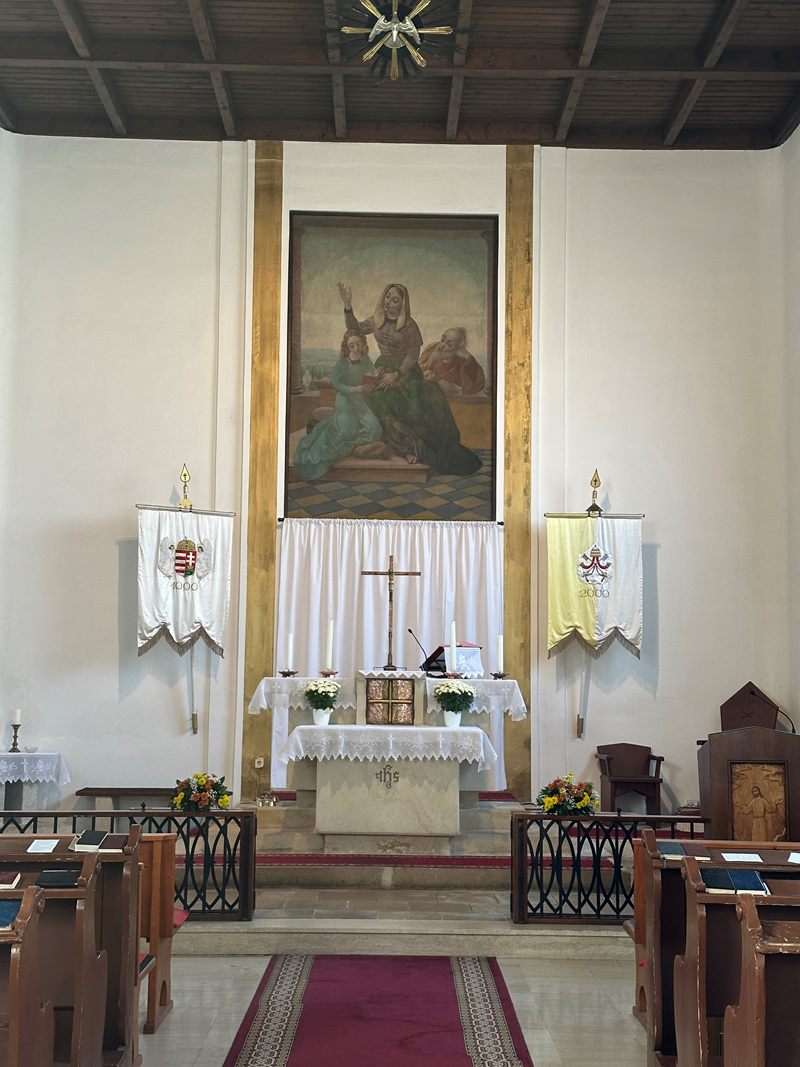 (larger photo)
The sanctuary, seen from the nave. 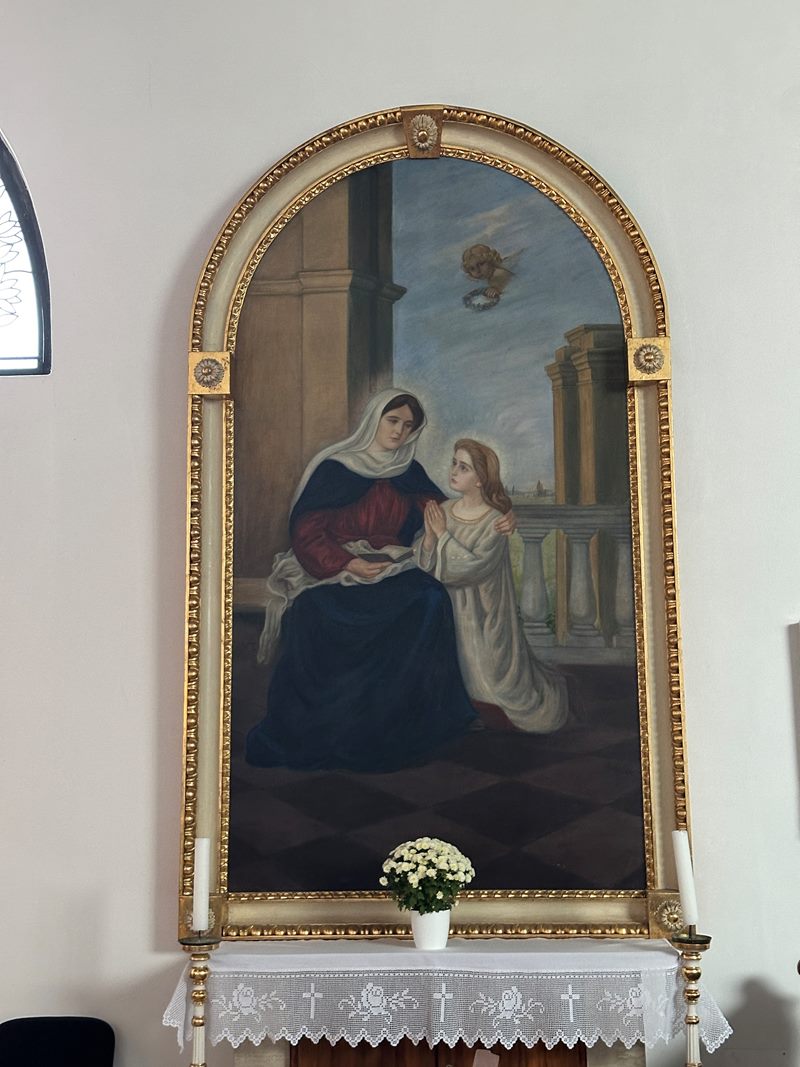 (larger photo)
The older altarpiece in its Louis XVI frame, which now hangs at the side. 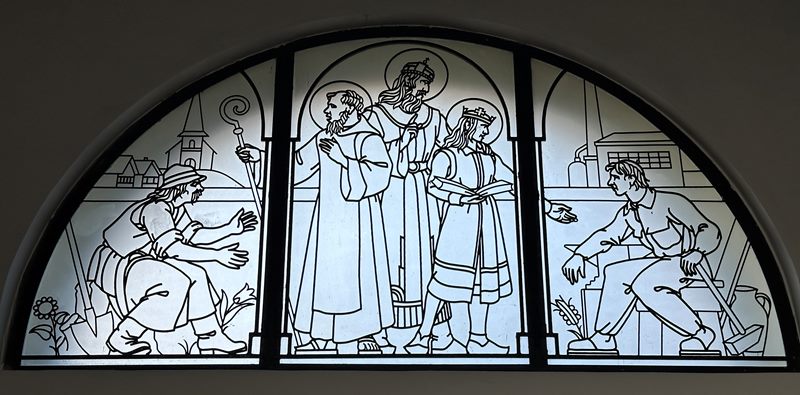 (larger photo)
One of the three wrought-iron windows with Hungarian saints and saints of everyday life. 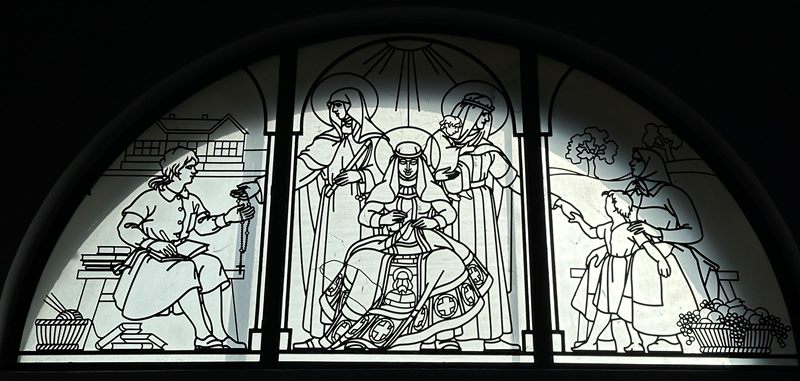 (larger photo)
The second window. 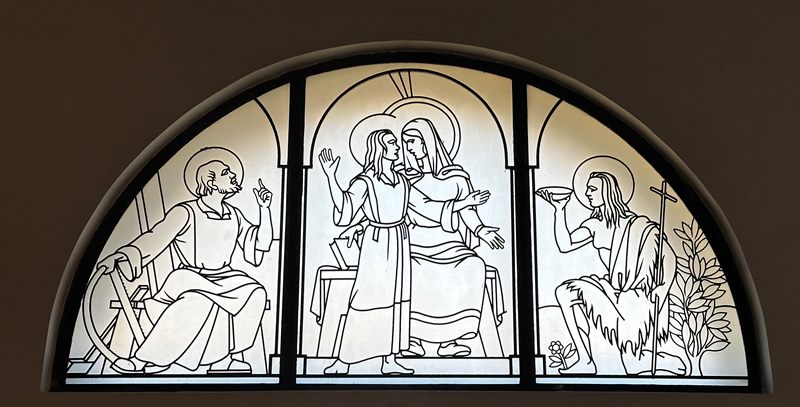 (larger photo)
The third window. 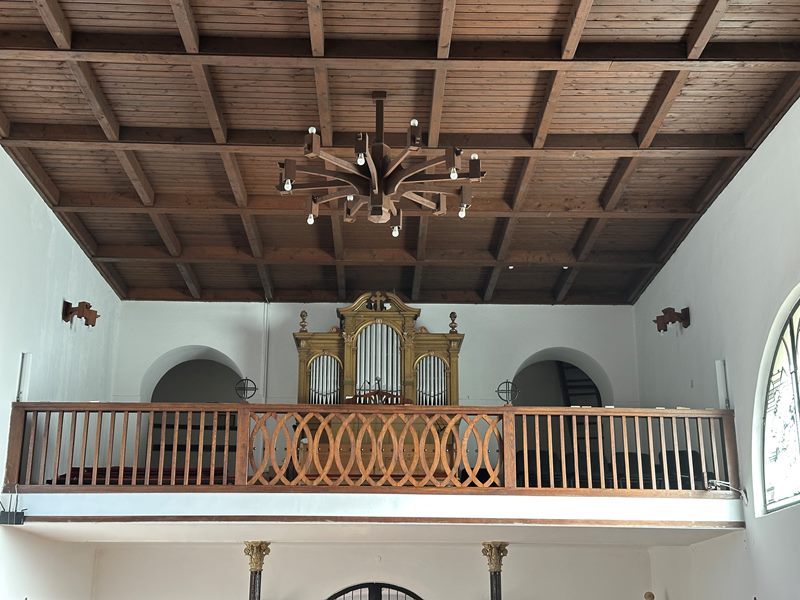 (larger photo)
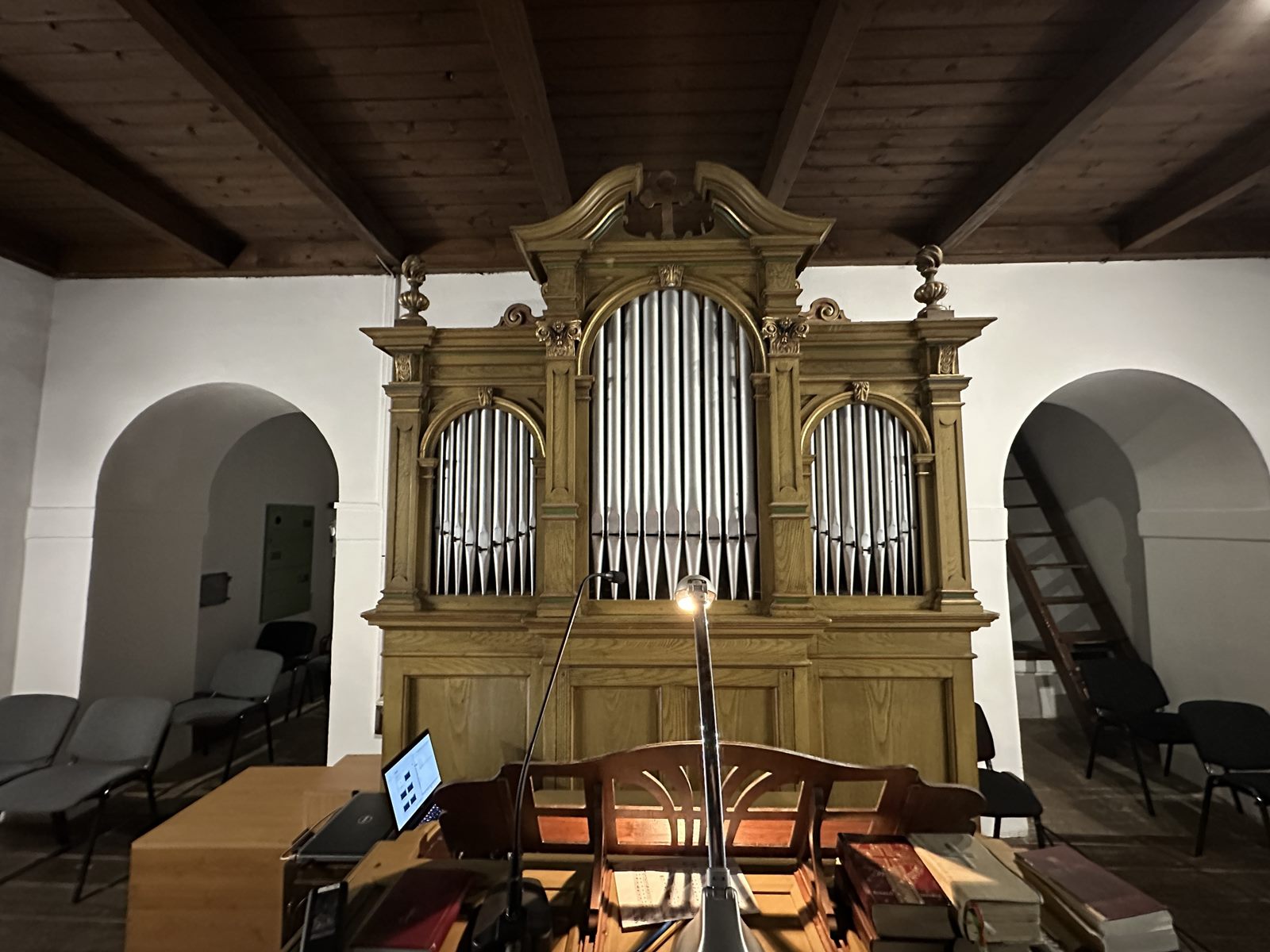
The gallery with the organ, under the coffered wooden ceiling. 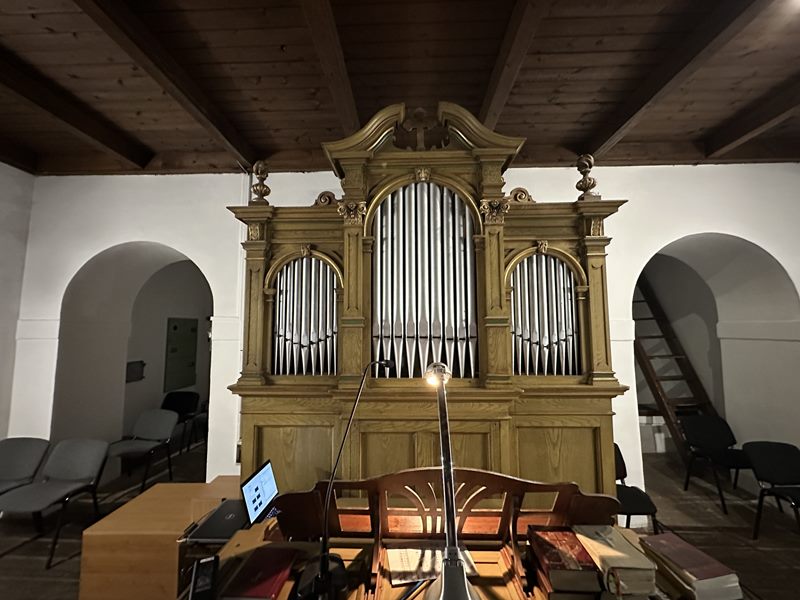 (larger photo)
The organ on the gallery. 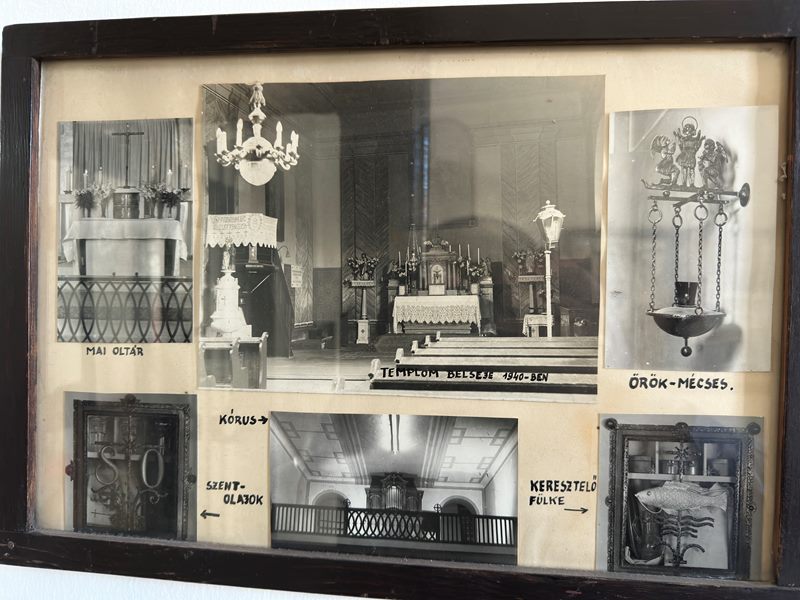 (larger photo)
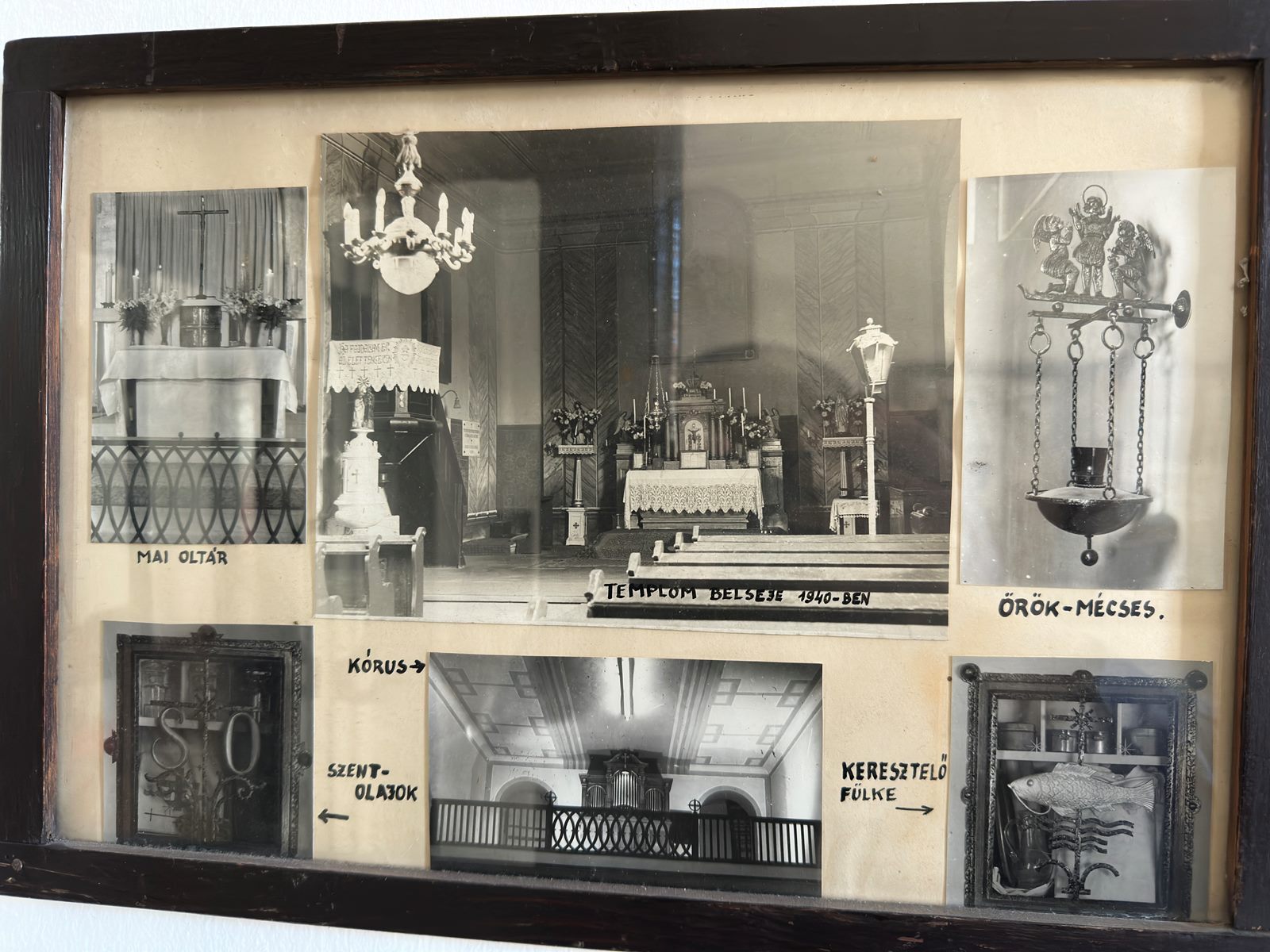
Old photographs in a frame in the church. The large one, labelled Templom belseje 1940-ben
, shows the interior in 1940; the small ones show the altar of that time, the eternal lamp, the holy oils, the gallery with the organ and the baptismal niche.
Links
- Parish website (opens in a new tab) (in Hungarian)
- Parish history (opens in a new tab) (in Hungarian)
- Diocese of Székesfehérvár: Bia – Szent Anna plébánia (opens in a new tab) (in Hungarian)
- Biatorbágy heritage register: Szent Anna templom, Bia (opens in a new tab) (in Hungarian)
- Facebook page of the church (opens in a new tab)
- Video: Biatorbágy gyöngyszemei – 6. rész (BiatorbágyON) (opens in a new tab) (in Hungarian)
Sources
- BME, 2008: building-history study of the Sándor-Metternich manor (opens in a new tab) (PDF, in Hungarian)By Fekete J. Csaba and Gyetvainé Balogh Ágnes; it covers the church and its organs.
- Magyar Katolikus Lexikon: Biatorbágy (opens in a new tab) (in Hungarian)