Rieger · opus 1614 · 1910
The organ – Rieger, opus 1614
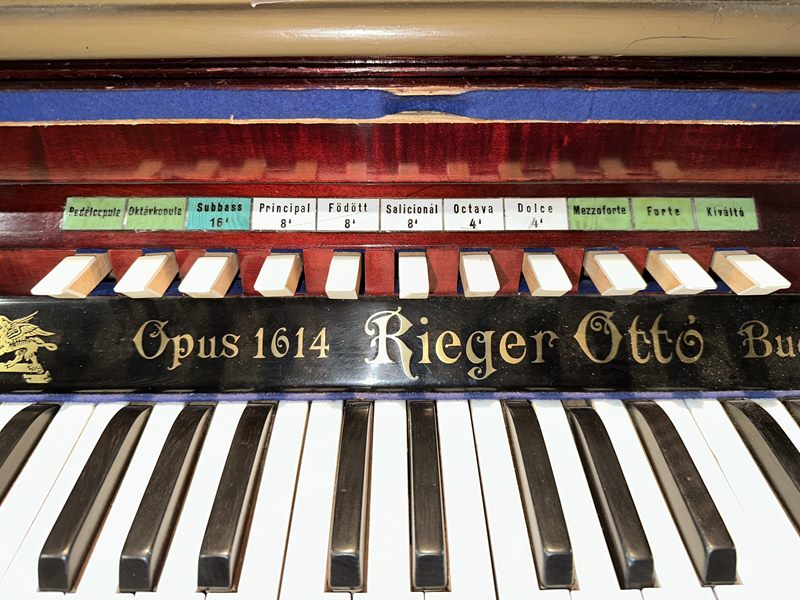
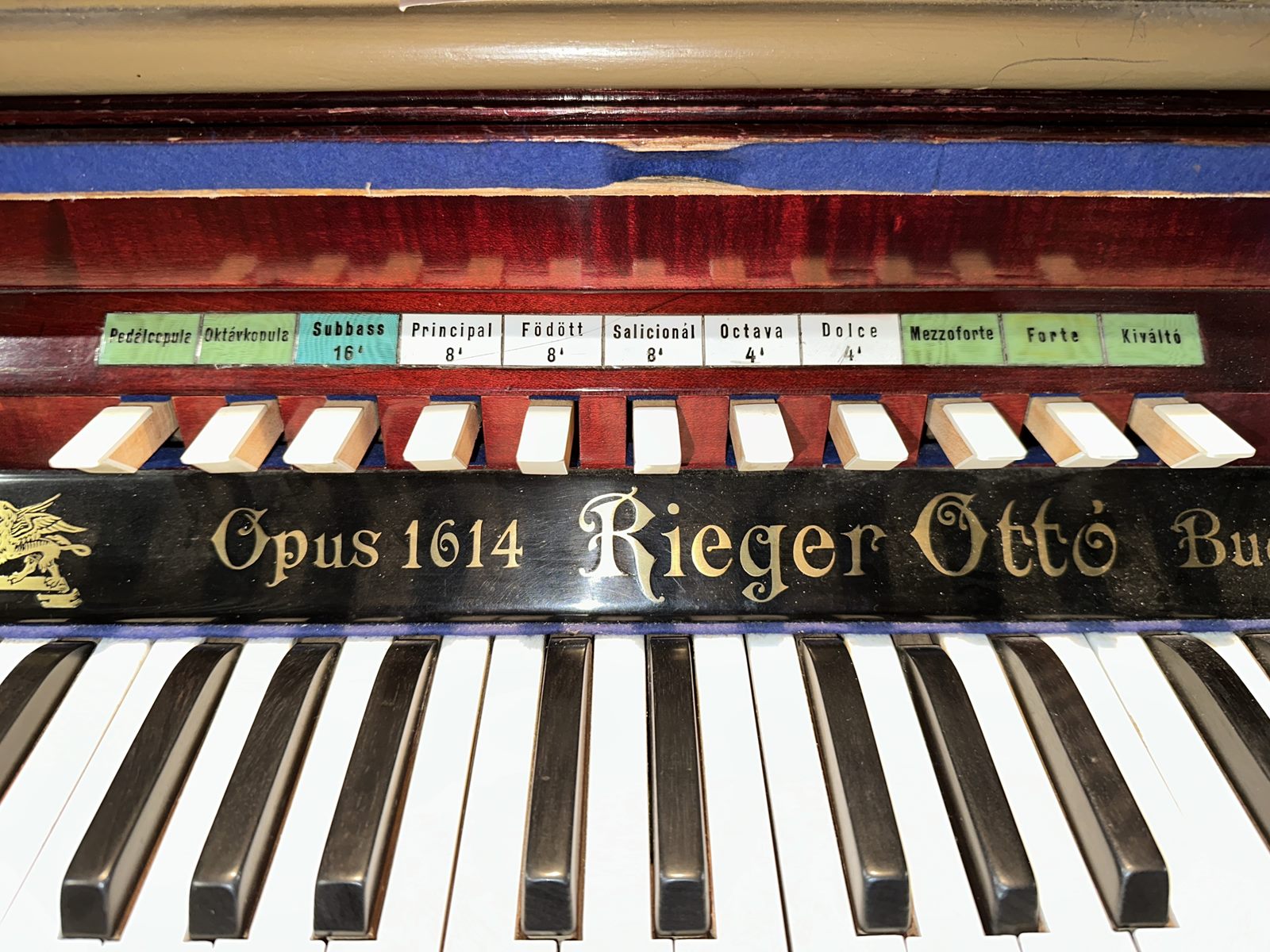
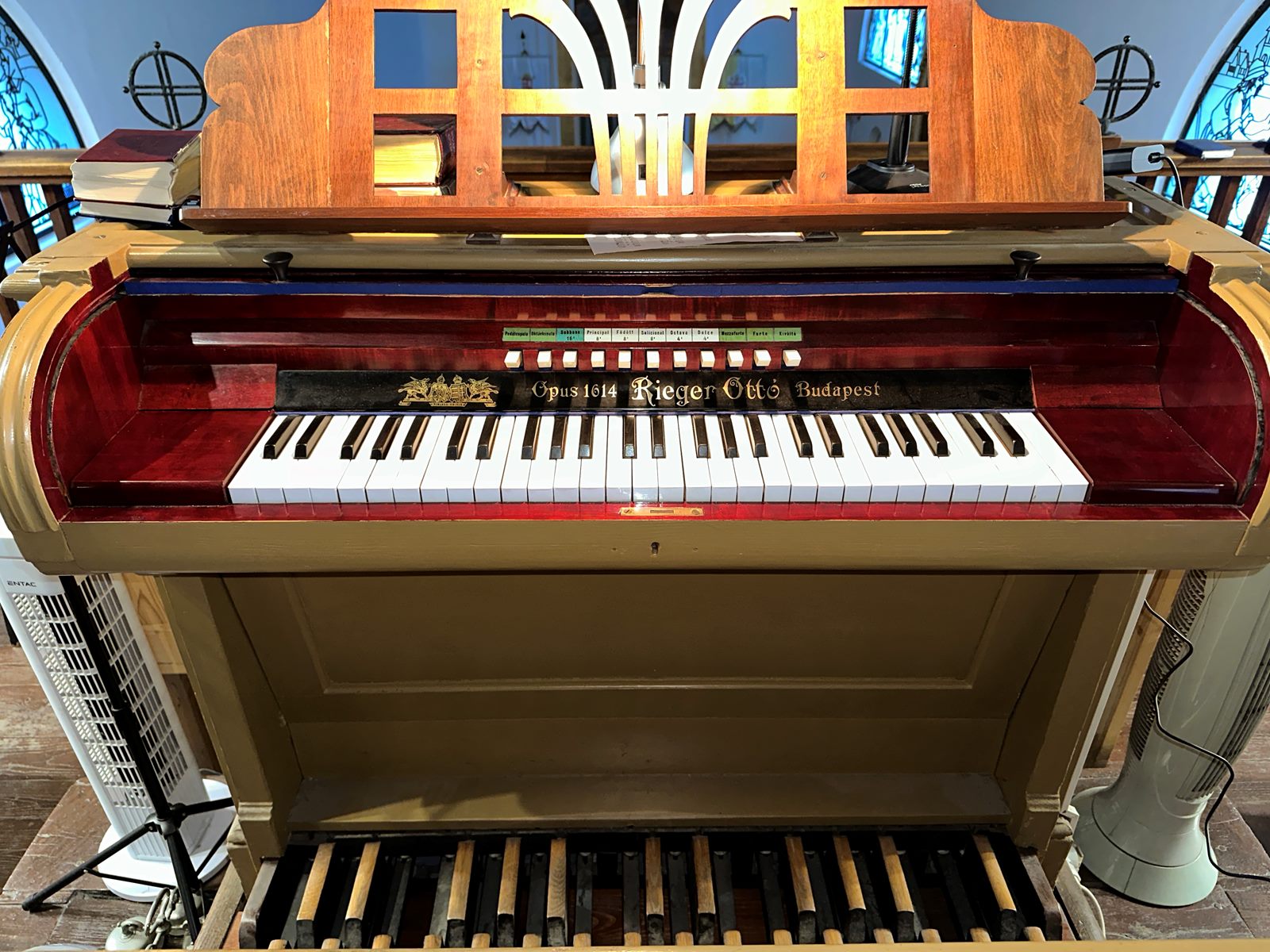
One manual and pedal, six speaking stops from four ranks and pneumatic action, built by Rieger in 1910. The console plate reads “Opus 1614 Rieger Ottó Budapest”.
This text was generated by AI from curated notes and may contain errors. Corrections welcome
Builder and date
The Magyar Katolikus Lexikon describes the organ in one line of its entry on Biatorbágy: org-ját (1/6 m/r, op. 1614.) 1910: a Rieger gyár építette.
That is: built by the Rieger factory in 1910 as opus 1614, with one manual and six stops. The console plate reads “Opus 1614 Rieger Ottó Budapest”.
According to Ferenc Solymosi's Rieger opus list, the organ is I/6/4: six speaking stops from four ranks, with pneumatic action (“p”) and cone chests (“k”). The church organist also confirms the pneumatic action; I have not seen the chests myself yet.
The 2008 building-history study calls the Rieger an organ of 11 változat
, eleven stops. The console has eleven tabs, but only six of them are speaking stops; the other five are couplers and combinations. That is probably why the counts differ.
The console
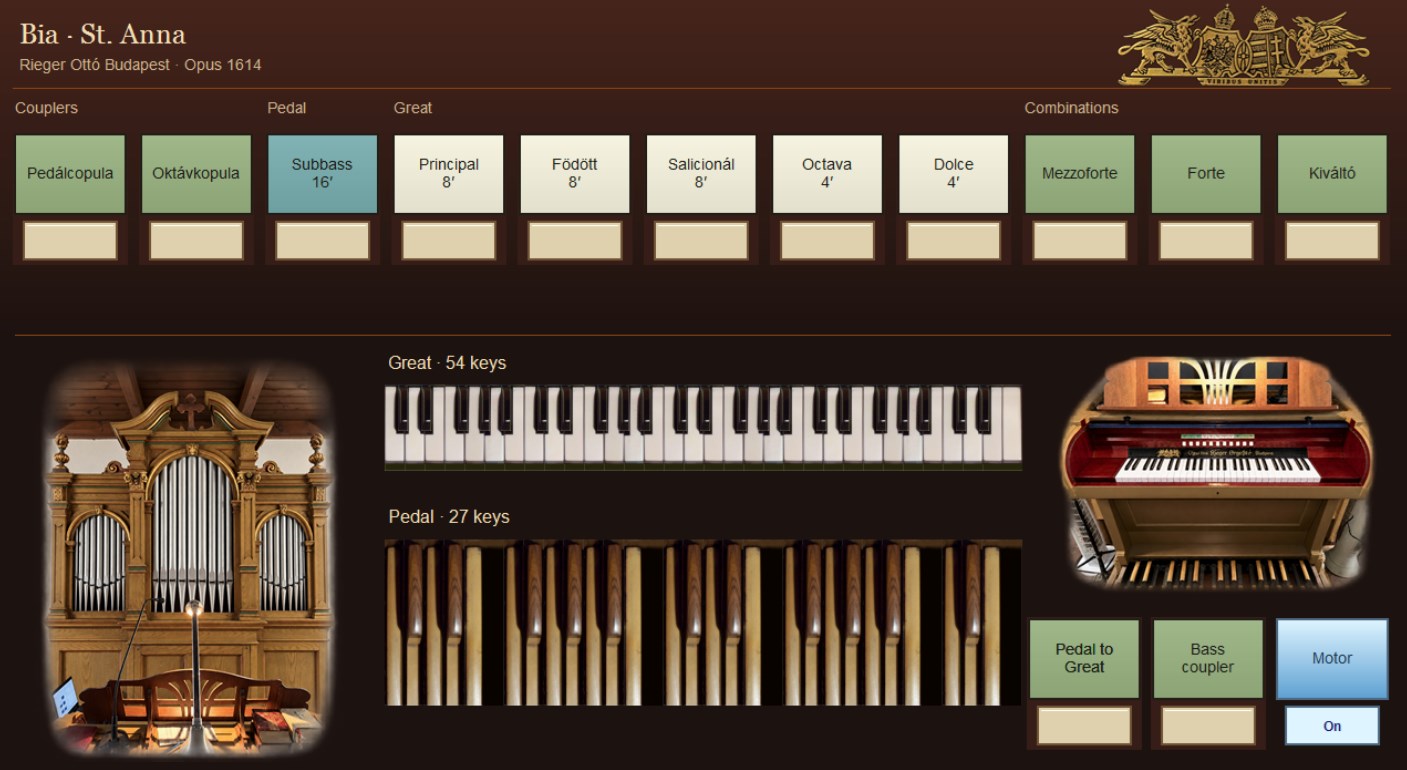
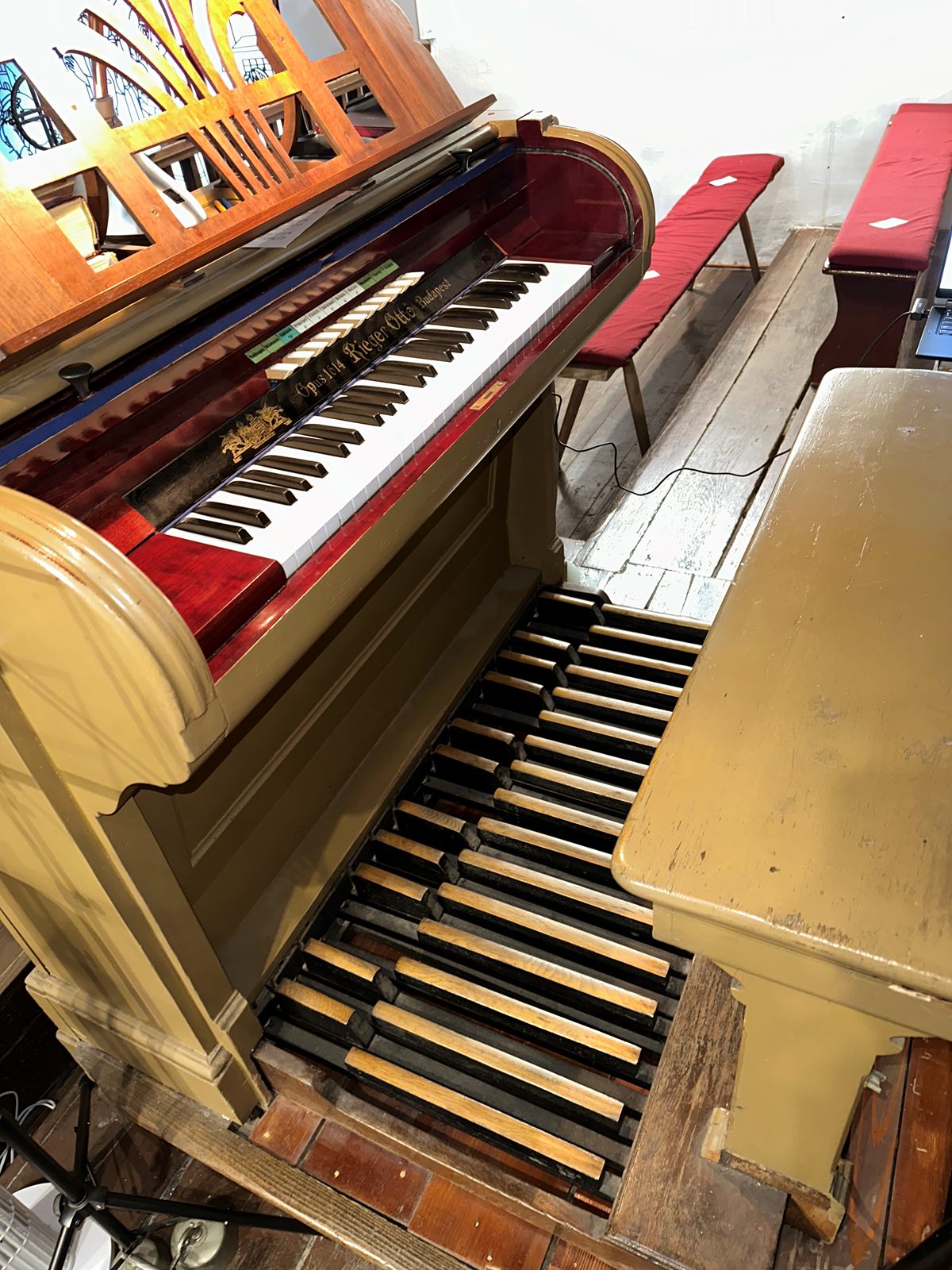
The organ is played from a separate console with a row of stop tabs above the single manual, a pedalboard and a music desk. Six of the eleven tabs are speaking stops: Principal 8', Födött 8' (Gedackt), Salicionál 8', Octava 4' and Dolce 4' on the manual, and Subbass 16' in the pedal. The other five are the pedal coupler Pedálcopula, the super-octave coupler Oktávkopula, the fixed combinations Mezzoforte and Forte, and Kiváltó, the cancel.
 (larger photo)
Six stops from four ranks
| Stop | Pipes |
|---|---|
| Manual C–f³, 54 notes | |
| Principal 8' | Its own rank |
| Födött 8' | Its own rank |
| Salicionál 8' | Its own rank |
| Octava 4' | The Principal 8' rank an octave higher, plus 12 treble pipes of its own |
| Dolce 4' | The Salicionál 8' rank an octave higher, plus 12 treble pipes of its own |
| Pedal C–d¹, 27 notes | |
| Subbass 16' | Its own rank |
I tested the borrowing of the two 4' stops myself and recorded their 12 extra treble pipes in 2026.
- Couplers
- Pedálcopula (manual to pedal) and Oktávkopula (manual super-octave coupler).
- Fixed combinations
- Mezzoforte draws Subbass 16', Principal 8', Octava 4' and Pedálcopula; Forte draws all six stops and both couplers. Kiváltó cancels them, and the registration from before sounds again.
- Action
- Pneumatic, confirmed by the church organist.
- Chests
- Cone chests, according to the opus list; not yet seen by me.
Pipes, compass and tuning
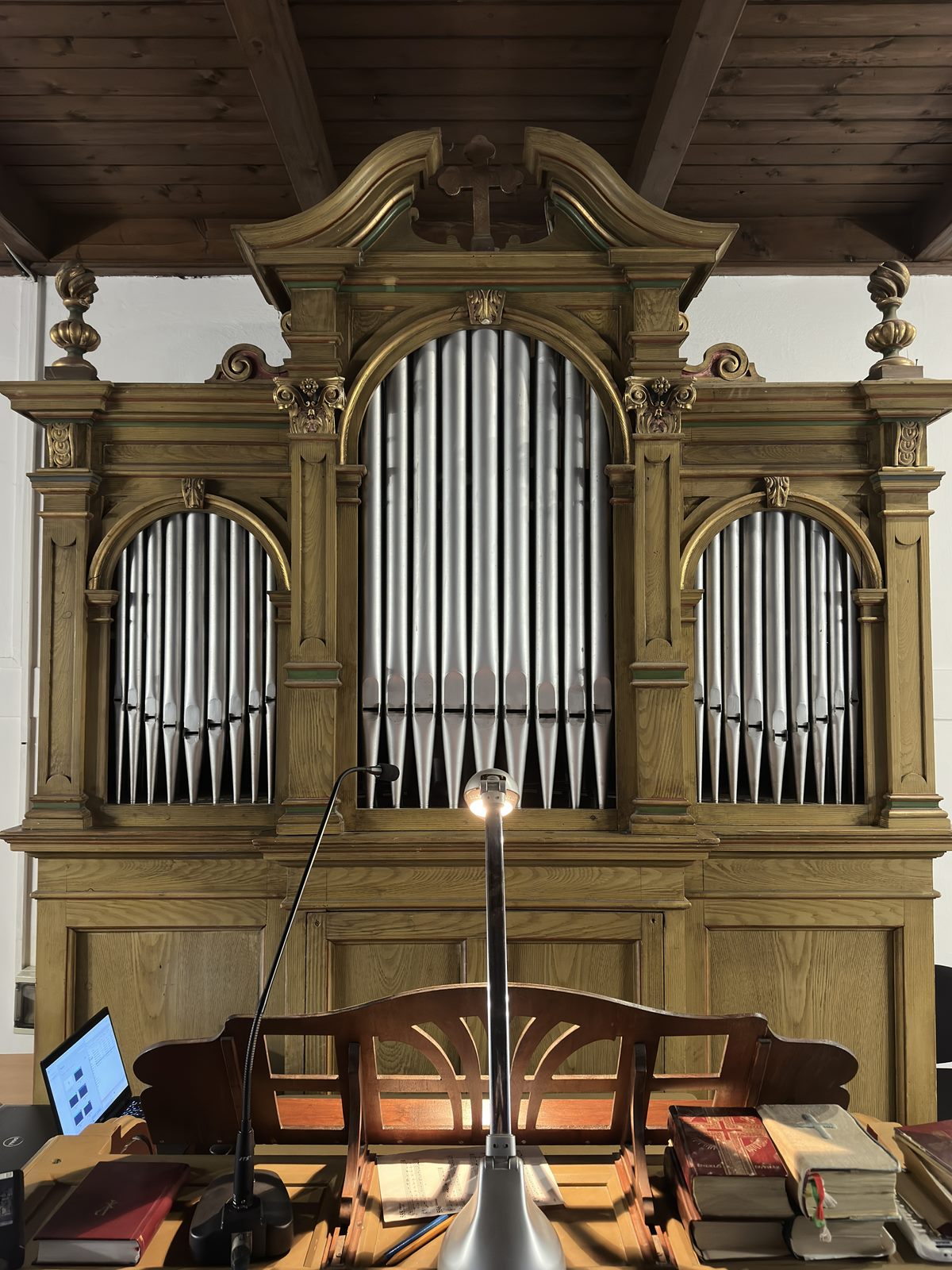
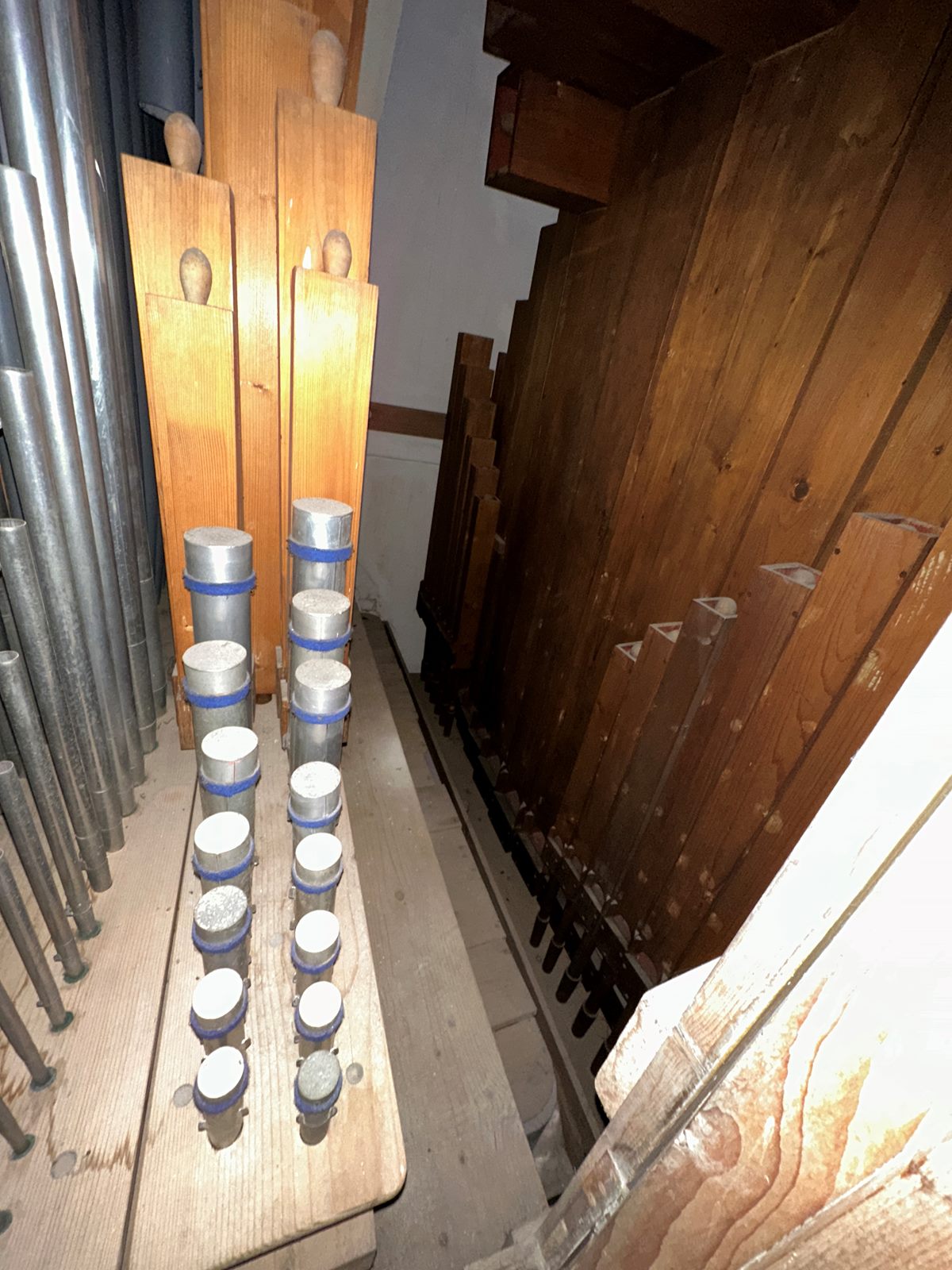
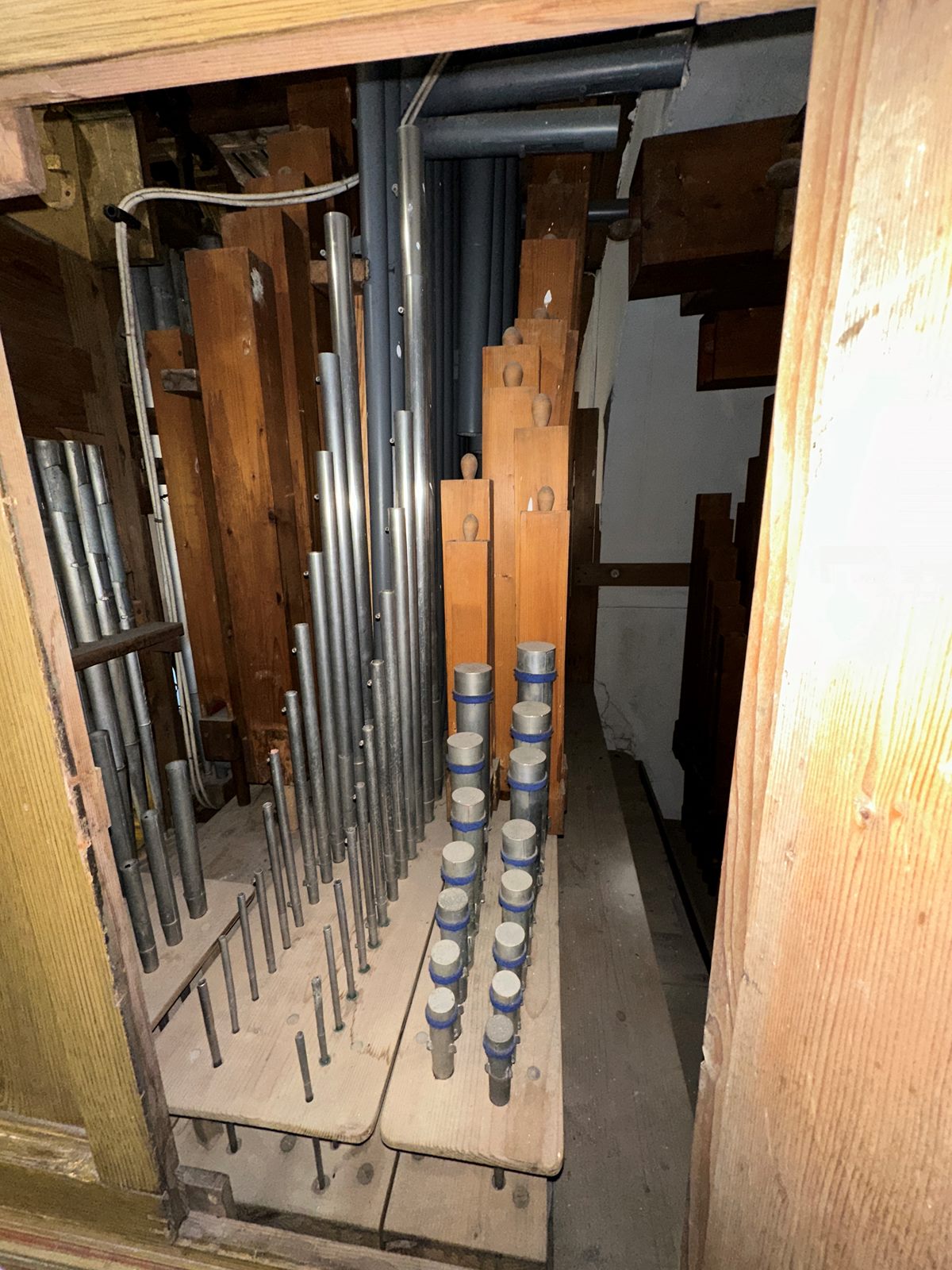
Behind the case stand metal flue pipes, capped metal pipes and large square wooden stopped pipes. Because I recorded every key, I know the compass: the manual runs from C to f³ (54 notes), the pedal from C to d¹ (27 notes).
According to my recording, the four ranks have 66 (Principal), 54 (Födött), 66 (Salicionál) and 27 (Subbass) pipes, about 213 in all. This is not a pipe-by-pipe inventory.
The organ is not tuned to equal temperament at A = 440 Hz. The lowest Subbass C, for example, measured about 32.2 Hz instead of the nominal 32.7 Hz.
From a six-stop organ to Rieger opus 1614
- 1805
A canonical visitation records a six-stop organ in the chapel.
- 1909–10
The patron has the choir gallery enlarged; its two stone columns are replaced by cast-iron ones.
- 1910
The six-stop organ, “as old as the church”, is replaced by a one-manual Rieger organ, opus 1614. It is still in use on the gallery and has not been altered since.
- 1948
The organ is repaired.
The building inventory of the 2008 study lists an “old (18th–19th century) organ case” on the gallery. So the 1910 Rieger probably stands in the case of the earlier organ, although the study does not say so in so many words.
The episcopal archive in Székesfehérvár (SzPL No. 227, Bia) holds files from 1910 (458/1910 and 625/1910) and 1948 (1824/1948) that are cited for these events. They may contain the contract or a description of the organ.
October 2026
What I observed
Noticed during the recording and my own tests. These are observations, not diagnoses.
- A silent Salicionál pipeOne pipe of the Salicionál 8' rank, the a², does not speak. The Dolce 4' note that uses the same pipe is silent too; the other stops sound at that key.
- A key that does not repeatOne manual key does not repeat when it is struck rapidly, with every stop. After a longer pause it plays again.
- The top pedal noteThe top pedal note, d¹, does not sound from the Subbass 16' rank alone. The same pedal key does play the manual through Pedálcopula.
Because of the first and the third, two samples of my set are reconstructed from neighbouring pipes: see the sample set.
Organs with the same or a similar stoplist
Rieger built other organs with this stoplist or one very like it: Principal 8', a stopped 8', Salicionál 8', Octava 4' and Dolce 4' borrowed from the 8' ranks, and Subbass 16'. I have checked two of them. The other six are the same or very similar according to the Slovak organ catalogue alone; I have not checked them against other sources yet. The catalogue is offline at the moment, so the links lead to copies saved by the Internet Archive.
-
Checked
Dubová, Slovakia
The same stops, couplers, Mezzoforte, Forte and cancel, and the same pneumatic cone chest. The stopped 8' is called Gedackt. The closest match I know.
Organ description (opens in a new tab) (in Slovak) · Church on Google Maps (opens in a new tab)
-
Checked
Dovalovo, Slovakia
The same six stops, with the stopped 8' called Kryt, and both couplers; pneumatic action and cone chests. The combinations and the borrowing of the 4' stops are not stated.
Parish photo album (opens in a new tab) (in Slovak) · Church on Google Maps (opens in a new tab)
-
Not yet checked by me
Šemša, Slovakia
One manual and pedal, six stops from four ranks, two couplers, Mezzoforte and Forte. The stopped 8' is called Bourdon.
Slovak organ catalogue, archived copy (opens in a new tab) (in Slovak) · Church on Google Maps (opens in a new tab)
-
Not yet checked by me
Lučivná, Slovakia
One manual and pedal, six stops from four ranks; both 4' stops are borrowed.
Slovak organ catalogue, archived copy (opens in a new tab) (in Slovak) · Church on Google Maps (opens in a new tab)
-
Not yet checked by me
Nižné Ružbachy, Slovakia
The same stoplist and the same cone chest.
Slovak organ catalogue, archived copy (opens in a new tab) (in Slovak) · Church on Google Maps (opens in a new tab)
-
Not yet checked by me
Kračúnovce, Slovakia
The same ranks.
Slovak organ catalogue, archived copy (opens in a new tab) (in Slovak) · Church on Google Maps (opens in a new tab)
-
Not yet checked by me
Jacovce, Slovakia
The same stops.
Slovak organ catalogue, archived copy (opens in a new tab) (in Slovak) · Church on Google Maps (opens in a new tab)
-
Not yet checked by me
Podbiel, Slovakia
A Födött 8' and four ranks; opus 1203 on the console.
Slovak organ catalogue, archived copy (opens in a new tab) (in Slovak) · Church on Google Maps (opens in a new tab)
Open questions
- Are the chests really cone chests, as the opus list says? I have not looked inside the case yet.
- The Rieger archive in Schwarzach may hold the original drawings; I have not asked yet.
The instrument in pictures
 (larger photo)
The stop tabs, the Rieger inscription and “Opus 1614”. 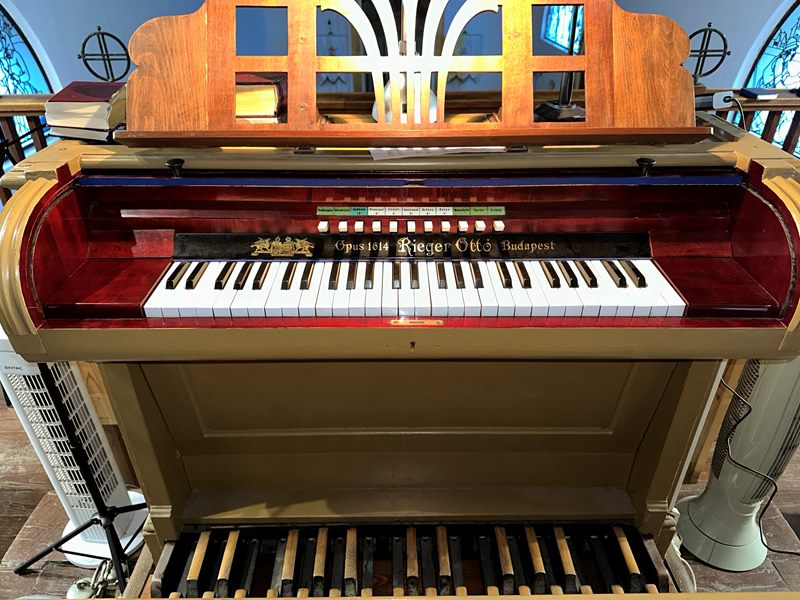 (larger photo)
The console from the front. 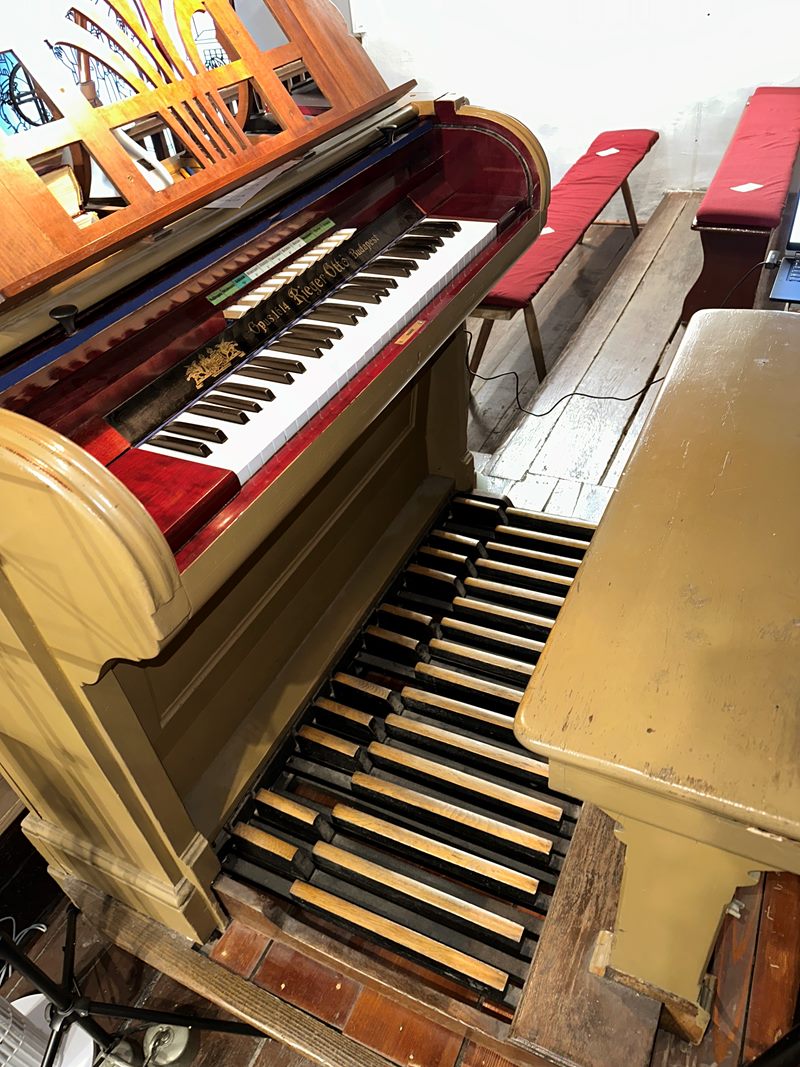 (larger photo)
The console from the side, with the floor and the pedalboard. 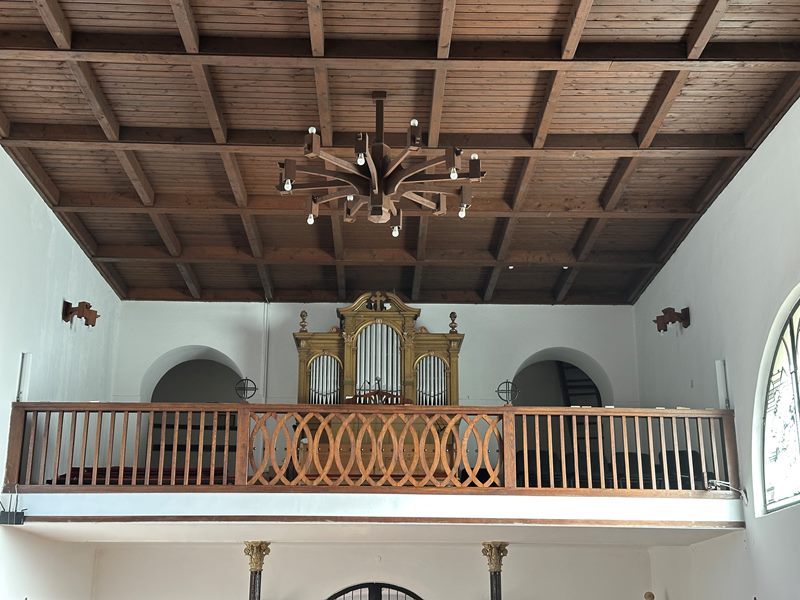 (larger photo)
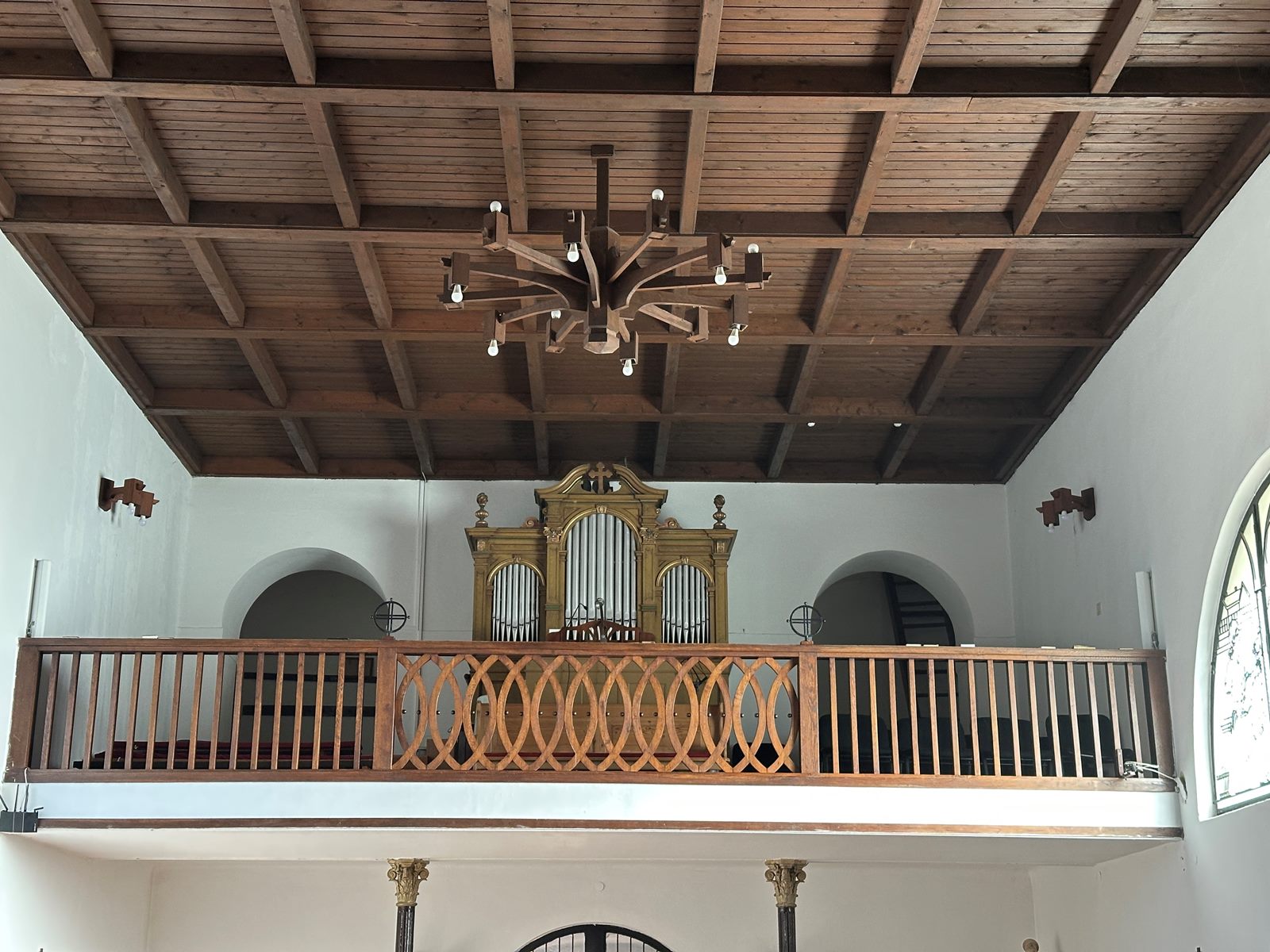
The organ on the gallery, seen from the nave, under the coffered wooden ceiling. 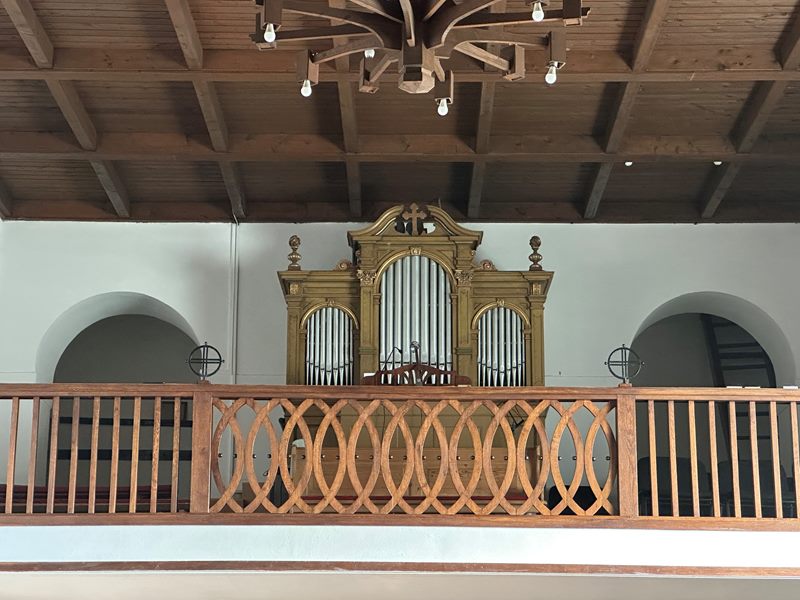 (larger photo)
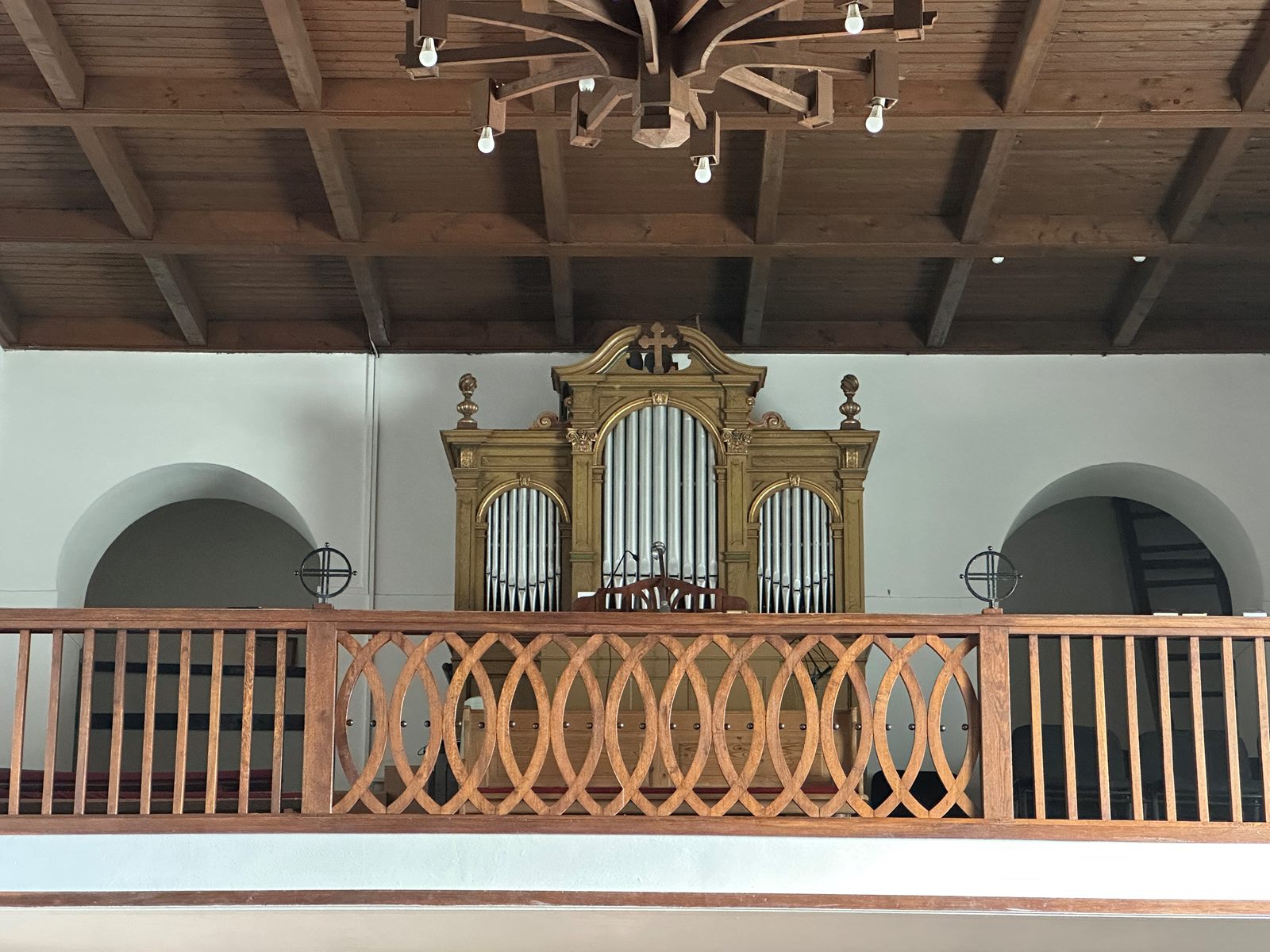
The organ case above the gallery railing. 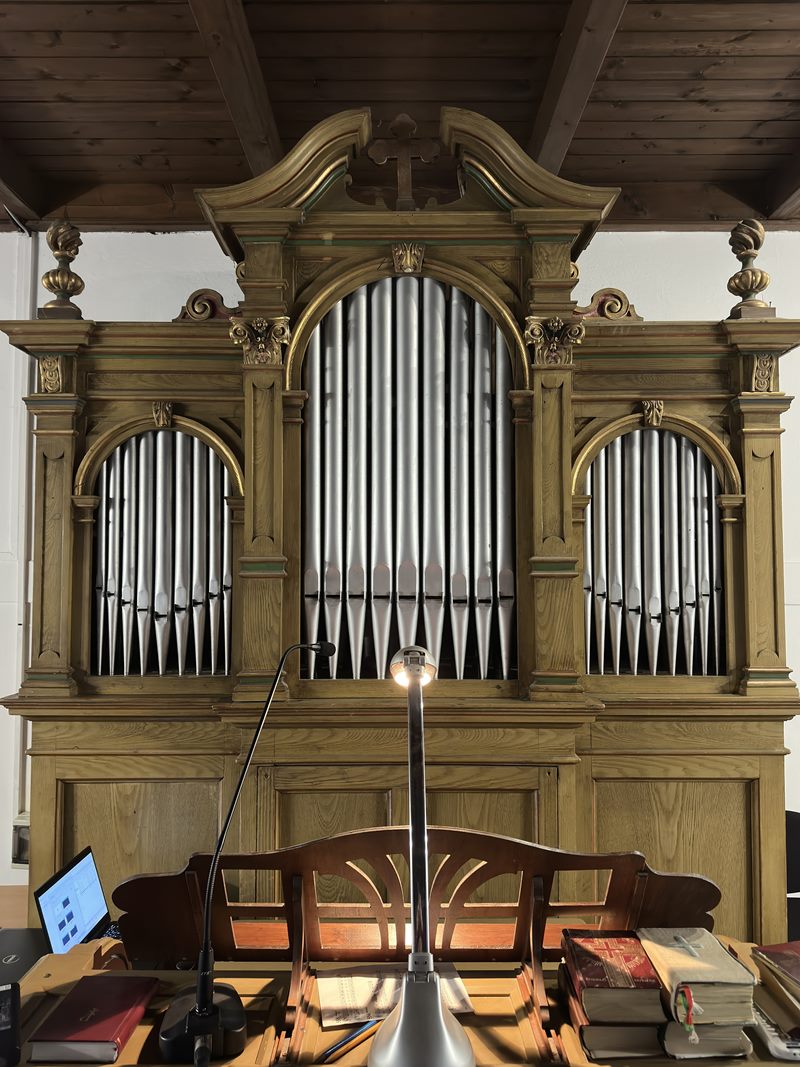 (larger photo)
The front: three pipe fields in the wooden case. 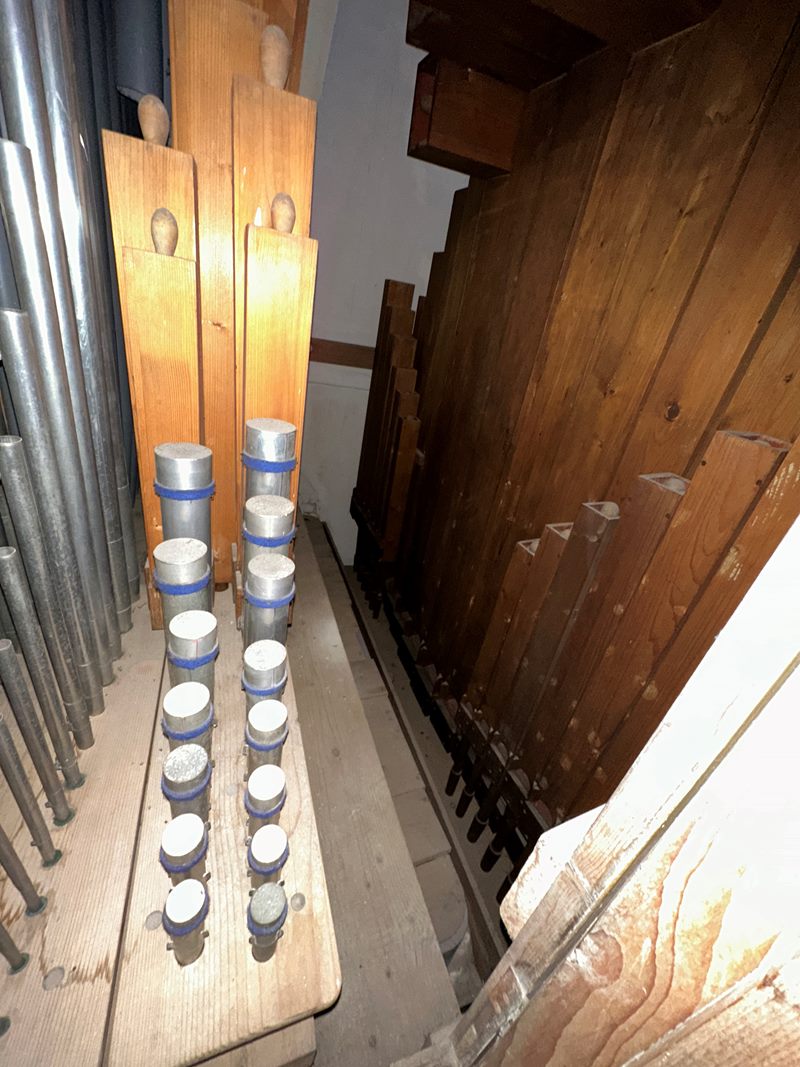 (larger photo)
Stopped pipes and large wooden pipes. 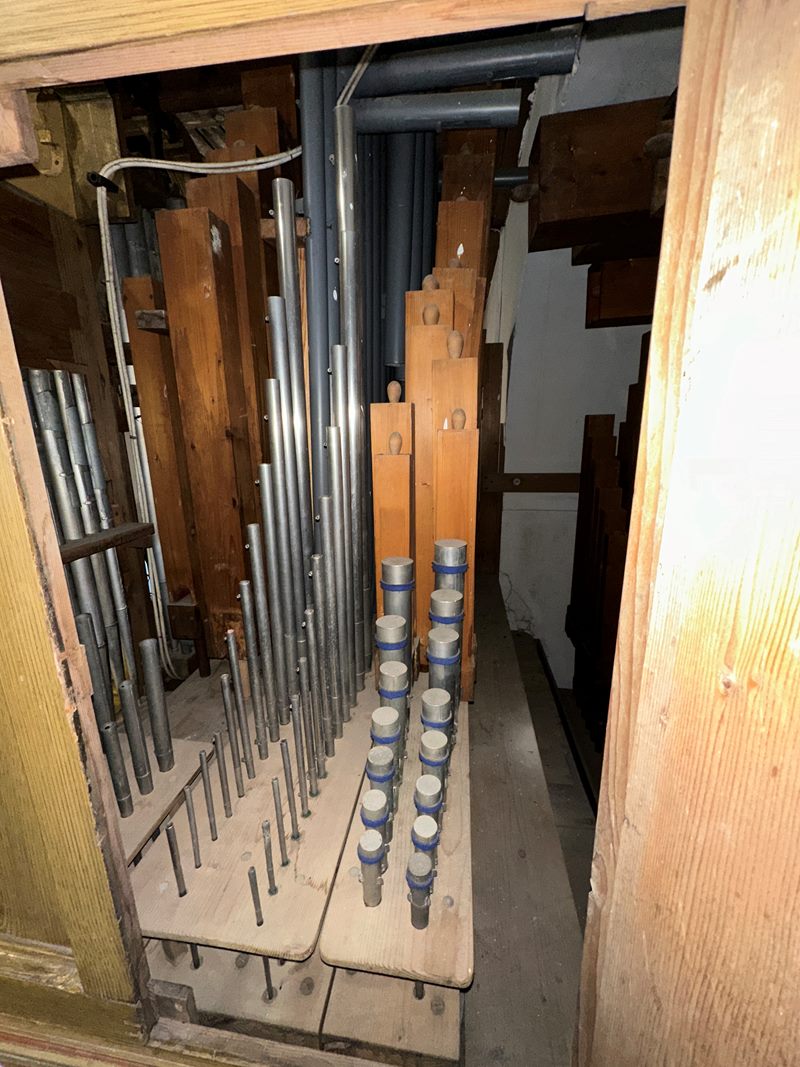 (larger photo)
Inside: pipe ranks, stopped metal pipes and wooden pipes. 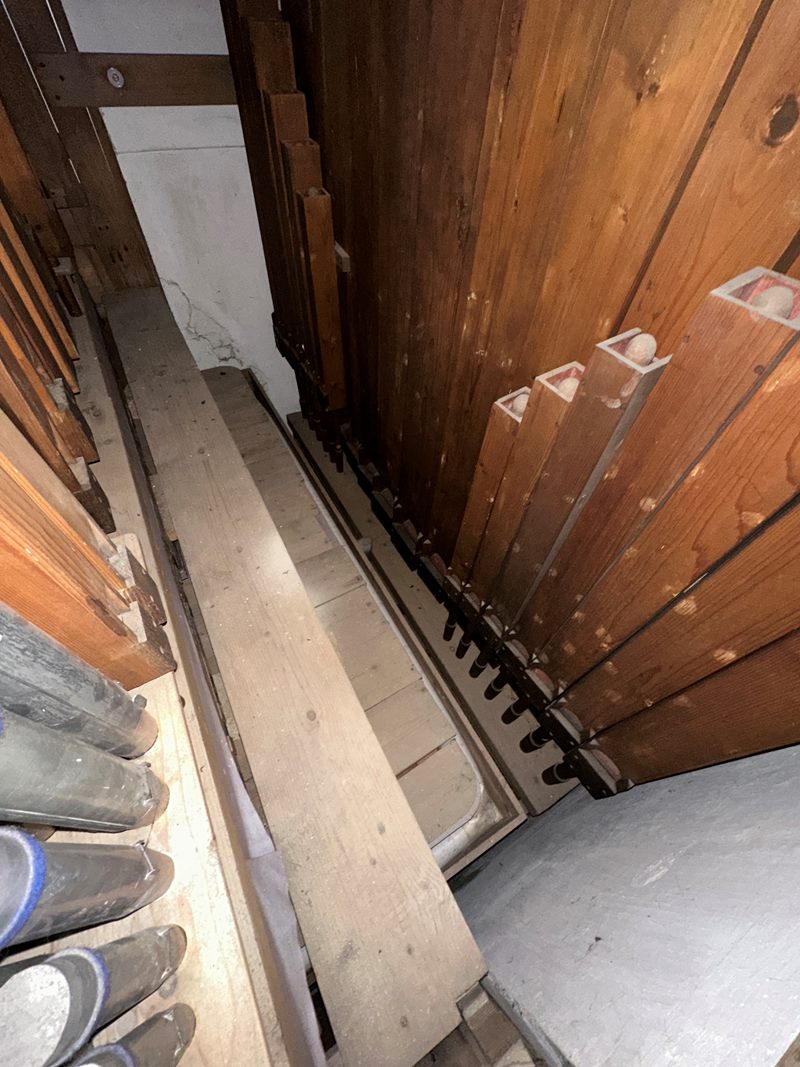 (larger photo)
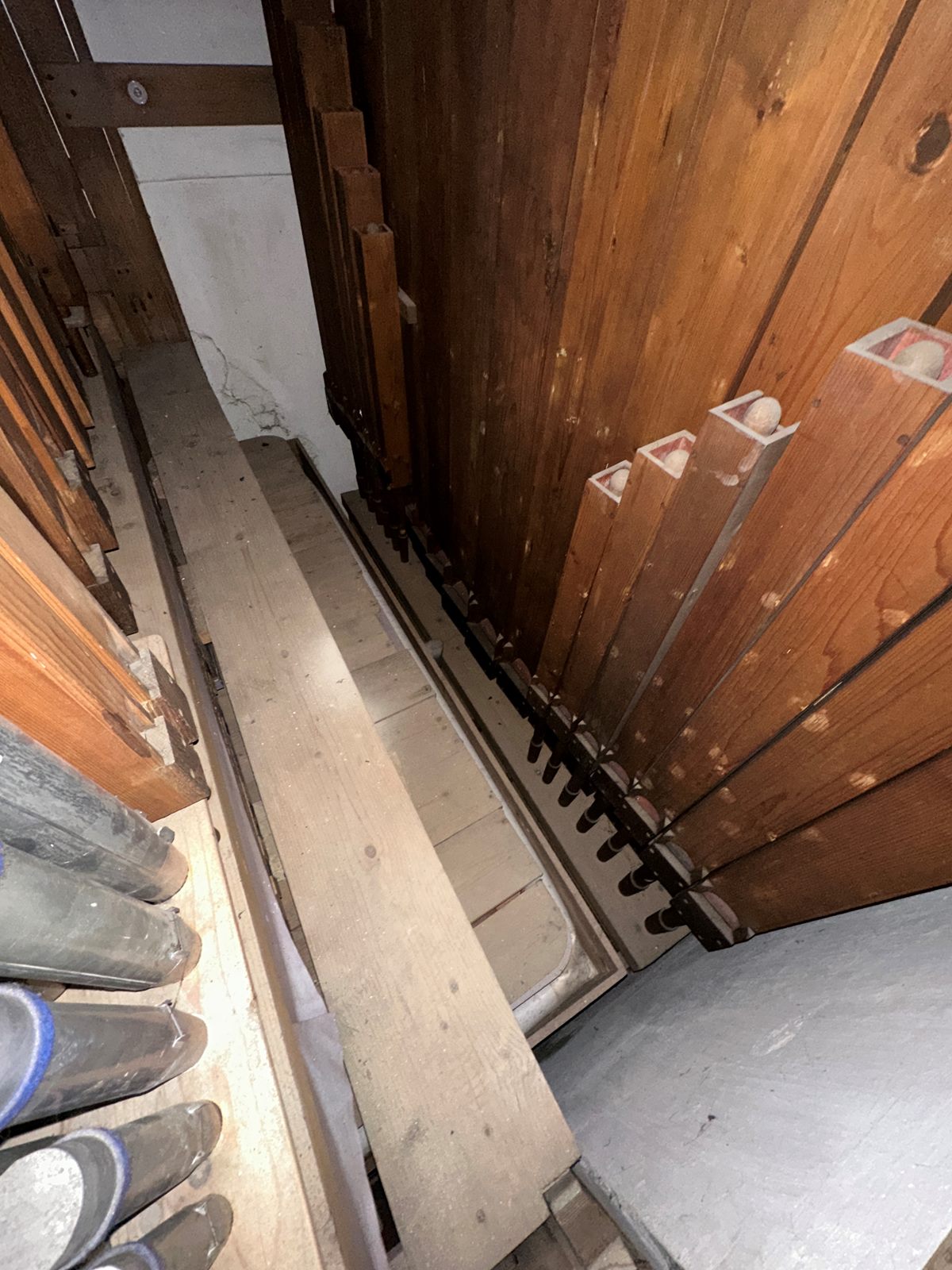
Inside the organ: tall wooden pipes and the access.
Sources
- Ferenc Solymosi: the Rieger organ factory and its opus list (opens in a new tab) (PDF, in Hungarian)Magyar Egyházzene VIII (2000/01), 105–140; the Bia entry is on printed page 127.
- BME, 2008: building-history study of the Sándor-Metternich manor (opens in a new tab) (PDF, in Hungarian)The six-stop organ recorded in 1805, the Rieger of 1910, the repair of 1948 and the old case.
- Magyar Katolikus Lexikon: Biatorbágy (opens in a new tab) (in Hungarian)